The Many Faces of the Tiger in Korean Folk Art
Words by Cicely Lobreglio
Only a few hundred years ago, Siberian tigers roamed freely across the Korean Peninsula. A cursory inquiry reveals the extent to which the presence of these tigers has been woven into the very fabric of Korean culture: in the main creation myth, colloquially known as the myth of Dangun, a bear and a tiger petition the Prince of Heaven to transform them into human beings. The bear is able to withstand the required challenges; the tiger, impatient, gives up and retreats back into the forest. Despite having now been hunted to extinction—largely during the period of Japanese colonial rule (1910–1945)—it is altogether unsurprising that the symbol of the tiger pervades much of Korean historical and contemporary art.
Traditional Korean shamanism venerates spirits or mountain gods called sansin (also spelled sanshin). In depictions of these gods, aptly called sansindo or sanshindo, the deity is represented as an old man with a long white beard, almost invariably surrounded by one or two large tigers rendered as domineering and protective forces. These indigenous beliefs later homogenised with Buddhism, but sacred animism had been prevalent in the country for thousands of years before its arrival. In order to ward off evil and bring good luck, it was customary for people to hang images of tigers—screens or embroidery with tiger patterns, for example—or, less commonly, parts of a real tiger in or outside their homes. In some instances, the claws of tigers were even worn as lucky charms or talismans.
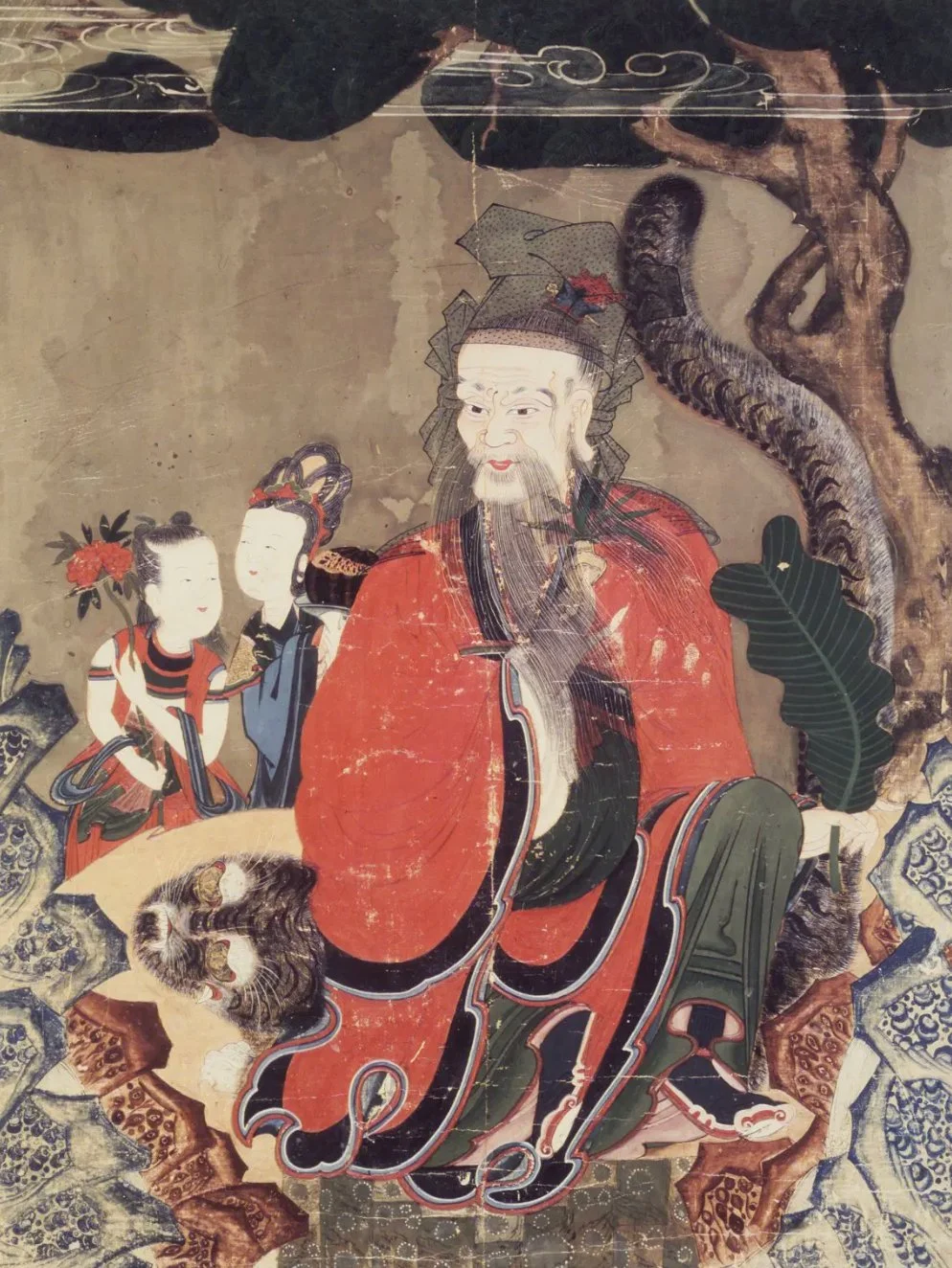
Mountain Spirit (Sanshin), 19th century Joseon Dynasty
Some of the oldest depictions of tigers in art can also be seen in the Bangudae or Daegok-ri Petroglyphs, a UNESCO World Heritage Site on the outskirts of the city of Ulsan. Only discovered in 1971 and designated a National Treasure less than twenty years later, these carvings depict many of the animals that prehistoric people would have encountered, including turtles, birds, and, of course, tigers.
Perhaps the most notable folk depictions of the tiger come from Korea’s Joseon (also written as Chosun or Choson) era, a period of significant cultural and technological development from 1392 to 1897. The latter centuries of this era gave rise to a type of folk art called Minhwa (literally meaning “painting of the people” or “popular painting”), and, consistent with custom, the tiger became a recurrent subject.
“In a valley without a tiger, a rabbit plays the role of the king.”
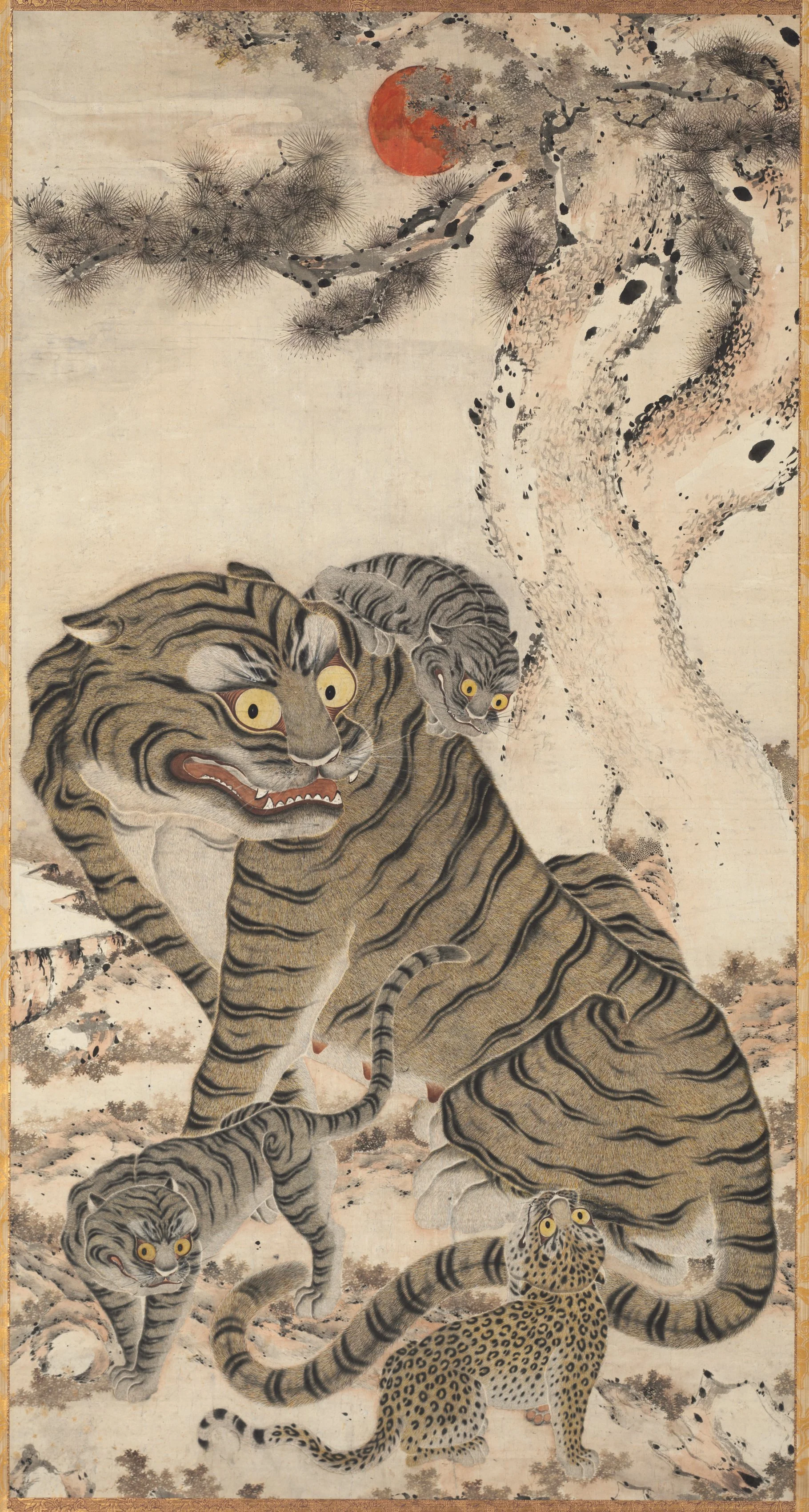
Tiger Family, late 18th century Joseon Dynasty
Typically produced by nomadic people with little to no conventional training, these images were painted unostentatiously on canvas. The tigers of Minhwa are portrayed far more comically than their earlier counterparts: enlarged yellow eyes protrude from the creatures’ heads, accompanied by a lolling tongue and teeth jutting haphazardly out of the mouth in all directions. Many Hojakdo images—that is, the subgenre of Minhwa that specifically depicts tigers—show the tiger with an amalgam of spots and stripes, owing to the contemporary belief that tigers and leopards were the same animal. This artistic misrepresentation was common not only in Korea, but also in Japan and other Asian countries.
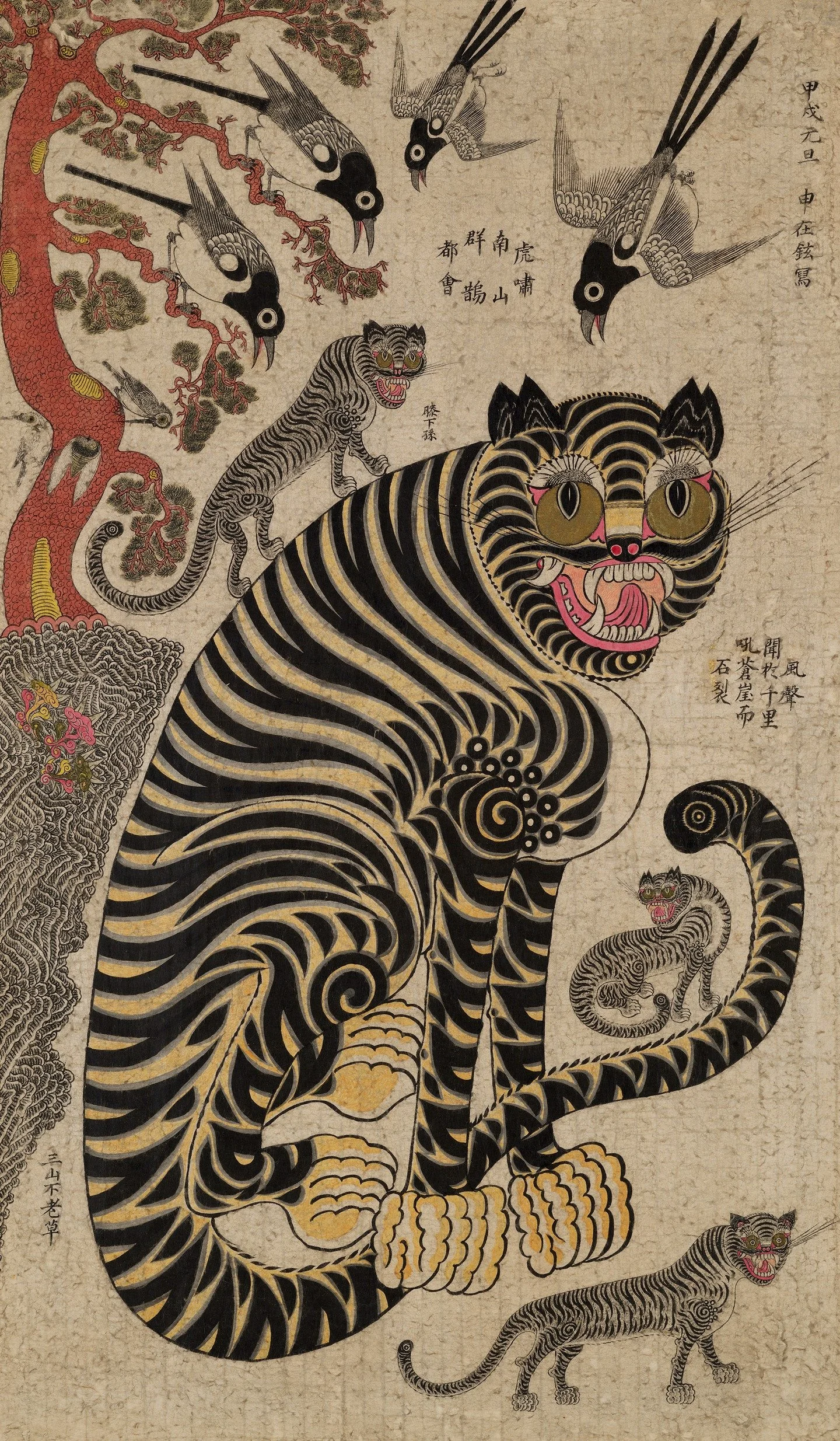
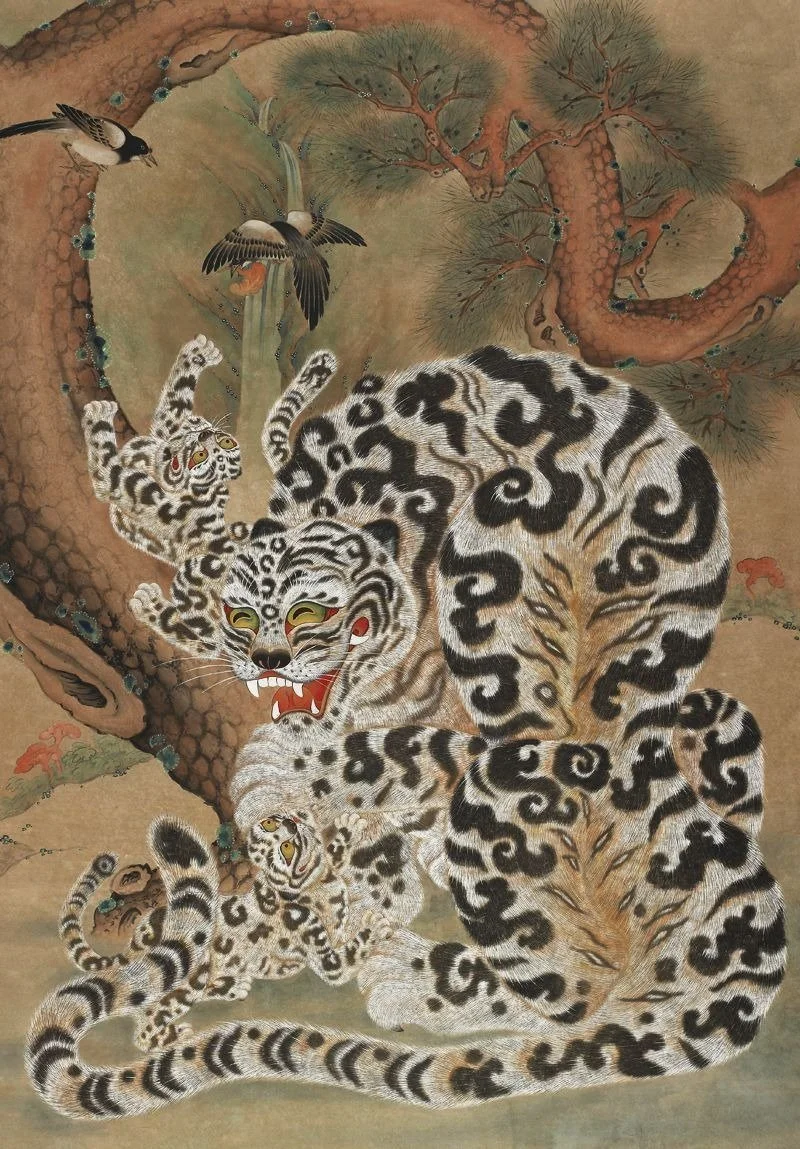
Another central motif is that of the magpie. While the tiger occupies more physical space on the canvas, it is often the perspicacity of the magpie or magpies in the branches of the pine tree above the tiger that draws the viewer’s eye. Many scholars have interpreted the comical portrayal of the tiger as a criticism of the societal hierarchy of the time, specifically poking fun at Joseon aristocracy. The tiger (aristocracy) is rendered as facetious and ridiculous, while the bird (the working people) looks down upon it. In fact, this style of depiction was often called babo horangi, meaning “stupid” or “idiot tiger.” Despite the element of satire, these paintings were still hung in homes—often around the Lunar New Year—to ward off evil spirits and bring protection.
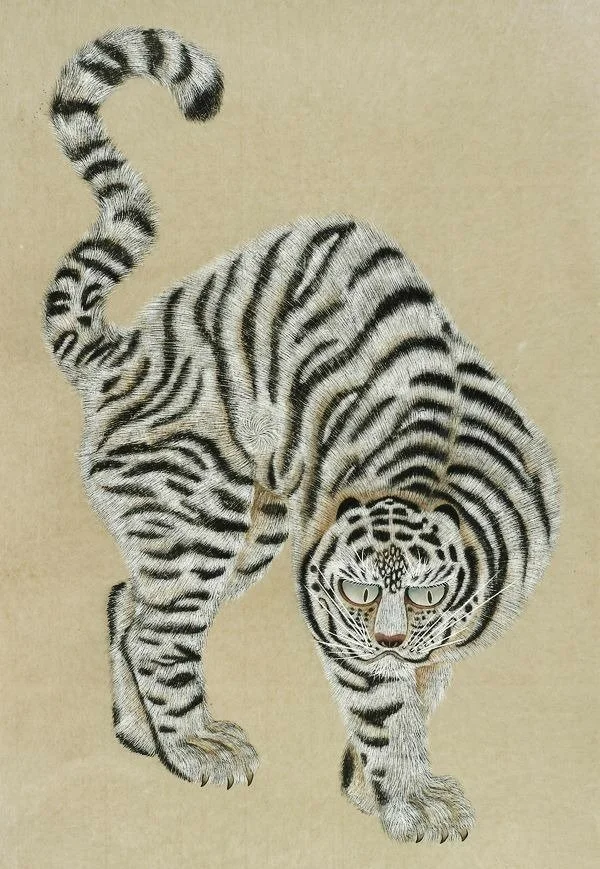
It is important to draw a distinction between the Siberian, or Amur, tiger and the white tiger (Baekho in Korean), which is also highly significant in Korean culture. Unlike the Siberian tiger, white tigers are in fact Bengal tigers with a recessive gene and are not thought to have ever lived on the Korean Peninsula due to its cold climate. Nonetheless, they remain a deeply important symbol across many Asian cultures—including China, Japan, and Vietnam—as one of the four guardians of the cardinal directions. The white tiger specifically guards the western heavens.
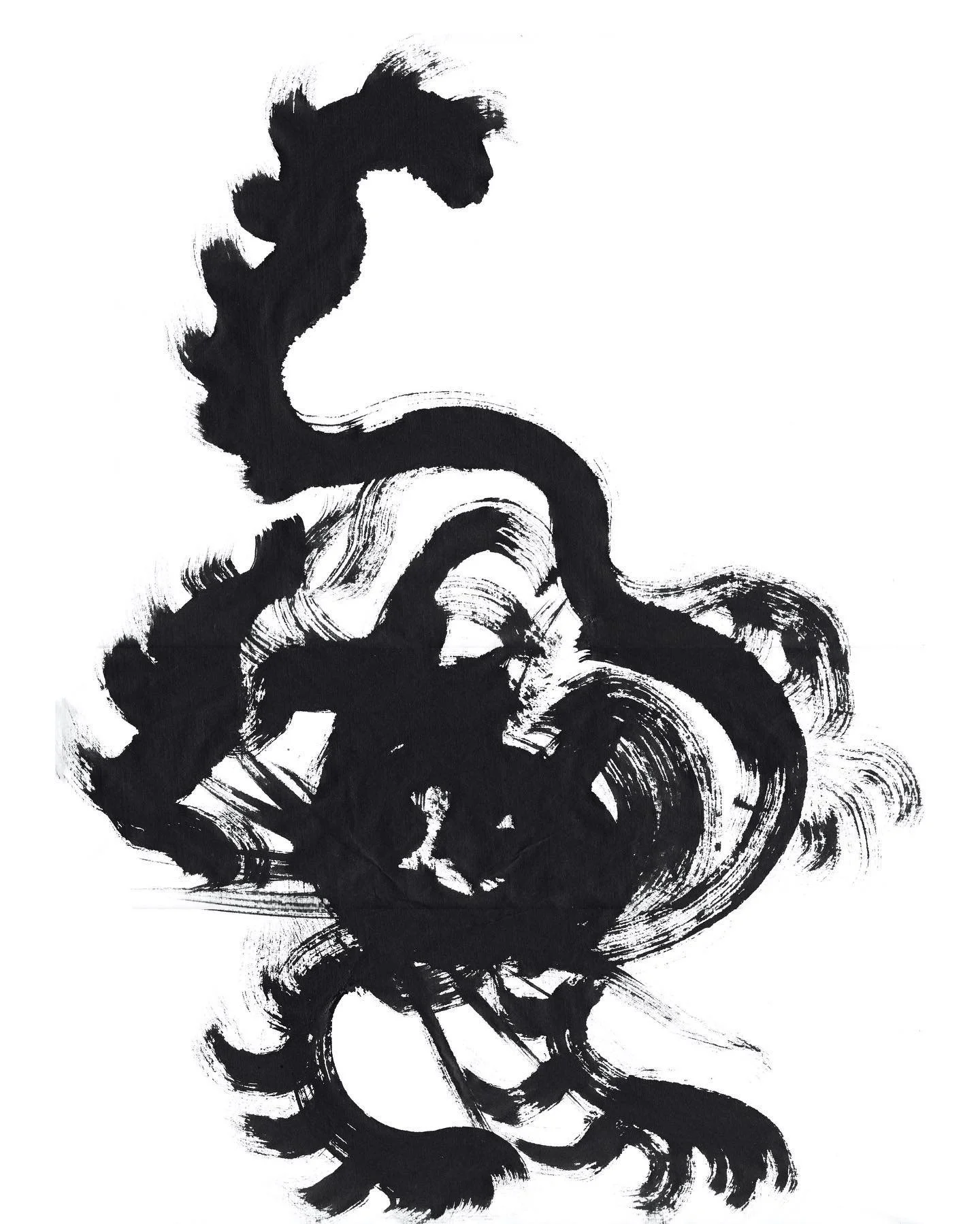
Despite no longer posing a tangible threat, the Amur tiger continues to inform much of contemporary Korean media. When Seoul hosted the Summer Olympic Games in 1988, the natural choice for a mascot was Hodori, a cartoon tiger wearing a traditional folk hat. Similarly, the 2018 Winter Games were represented by the white tiger Soohorang (sooho meaning “protection” and horangi meaning “tiger”). Last year, Netflix released the hugely popular K-Pop Demon Hunters, featuring characters Derpy the tiger and Sussie the magpie—a clear nod to the prestige of Minhwa. The image of the tiger remains deeply intertwined with Korea’s national identity.
From the mountain protector to the “idiot” of Minhwa portraiture, the tiger embodies many forms—fickle and capricious. Yet even in its lowest, most satirical form as the babo horangi, the tiger remains a depiction of the people themselves, whose cultural endurance shows no sign of extinction.