
KAKKO: Anti-Architectural Fashion
Interview by James Elliott
As human beings, we have this innate desire to categorise reality. We label music genres, ascribe personality types to people, and organise our ideas into neat schools of thought. But what happens when we defy these rigid interpretations? And how does this deconstructionist approach relate to fashion? These are the fundamental questions at the core of KAKKO, an archival select store in the Shimokitazawa area of Tokyo, which, since opening their doors in 2021, has incorporated anti-architectural philosophies into fashion curation, blurring the lines between art, research and philosophy.
Through its enigmatic spatial design consisting of concealed furnishings, exposed concrete and subtle drapery, the store presents itself as an unfinished canvas. A painting in the midst of its construction, continuously requiring interpretation to emerge through each customer’s experience.
In many ways it feels wrong to call the space a vintage store, with KAKKO frequently collaborating with Tokyo’s burgeoning creative community to create obscure editorials that look to unravel the seams of traditional fashion imagery, as well as hosting pop-up events for emerging designers and fashion workshops.
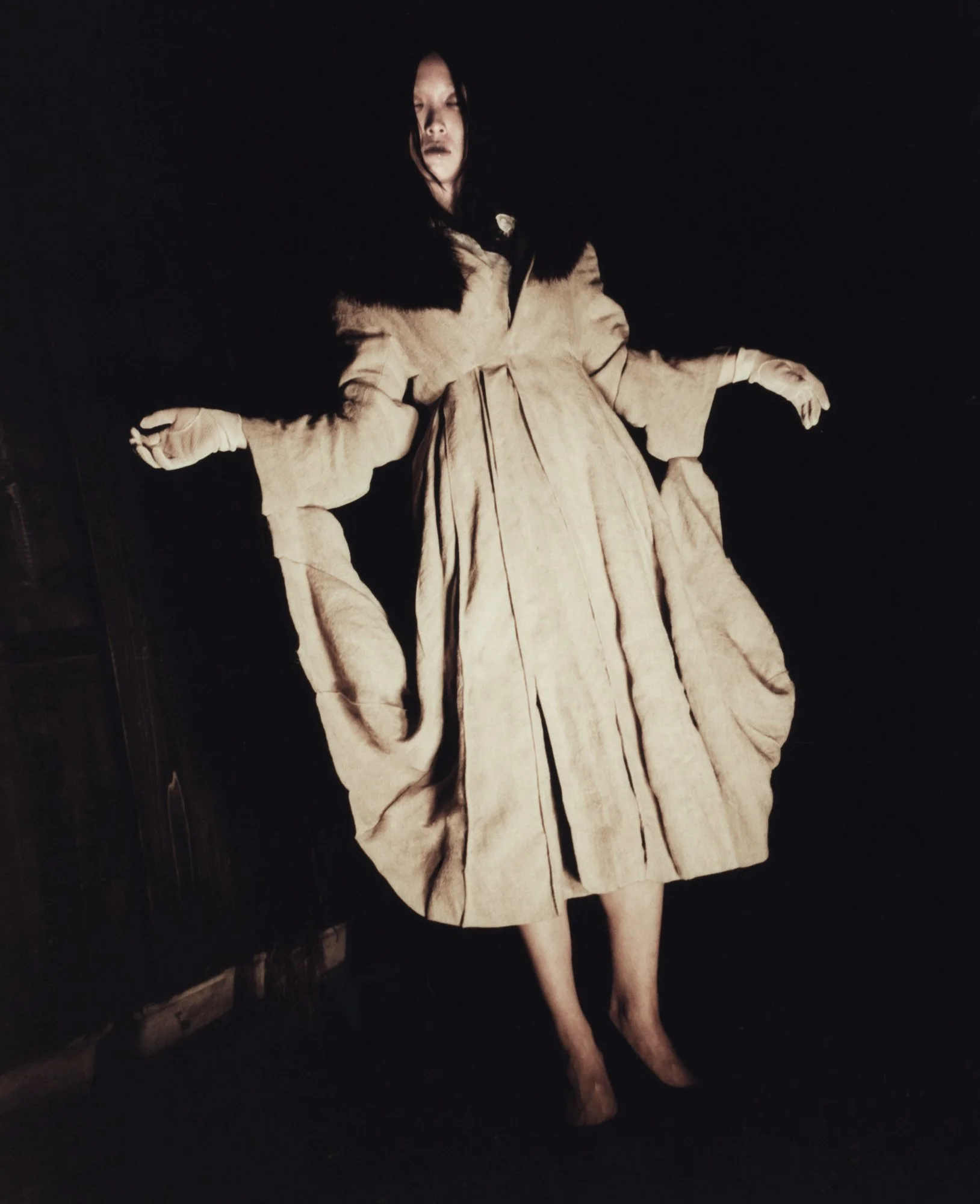
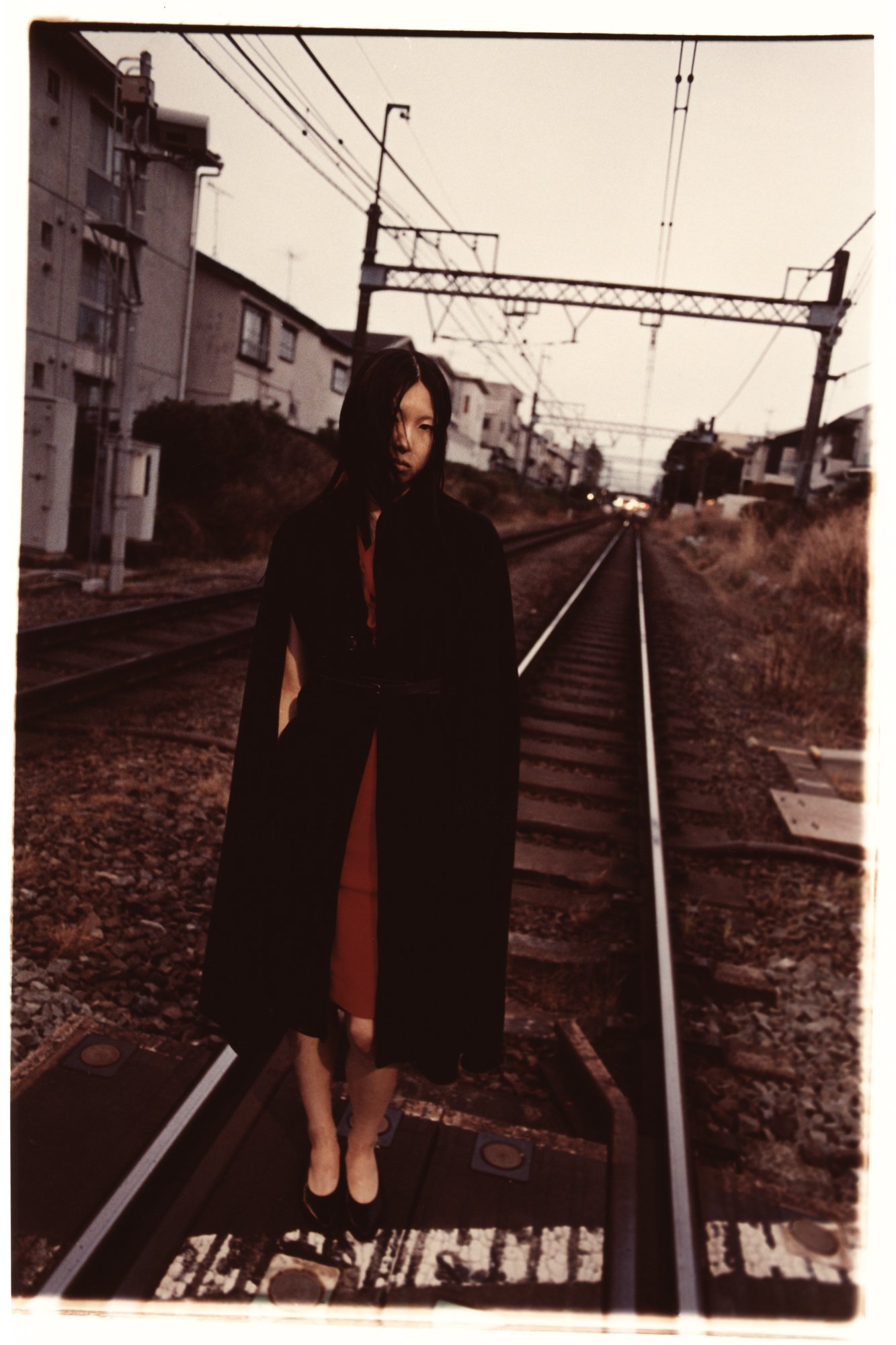
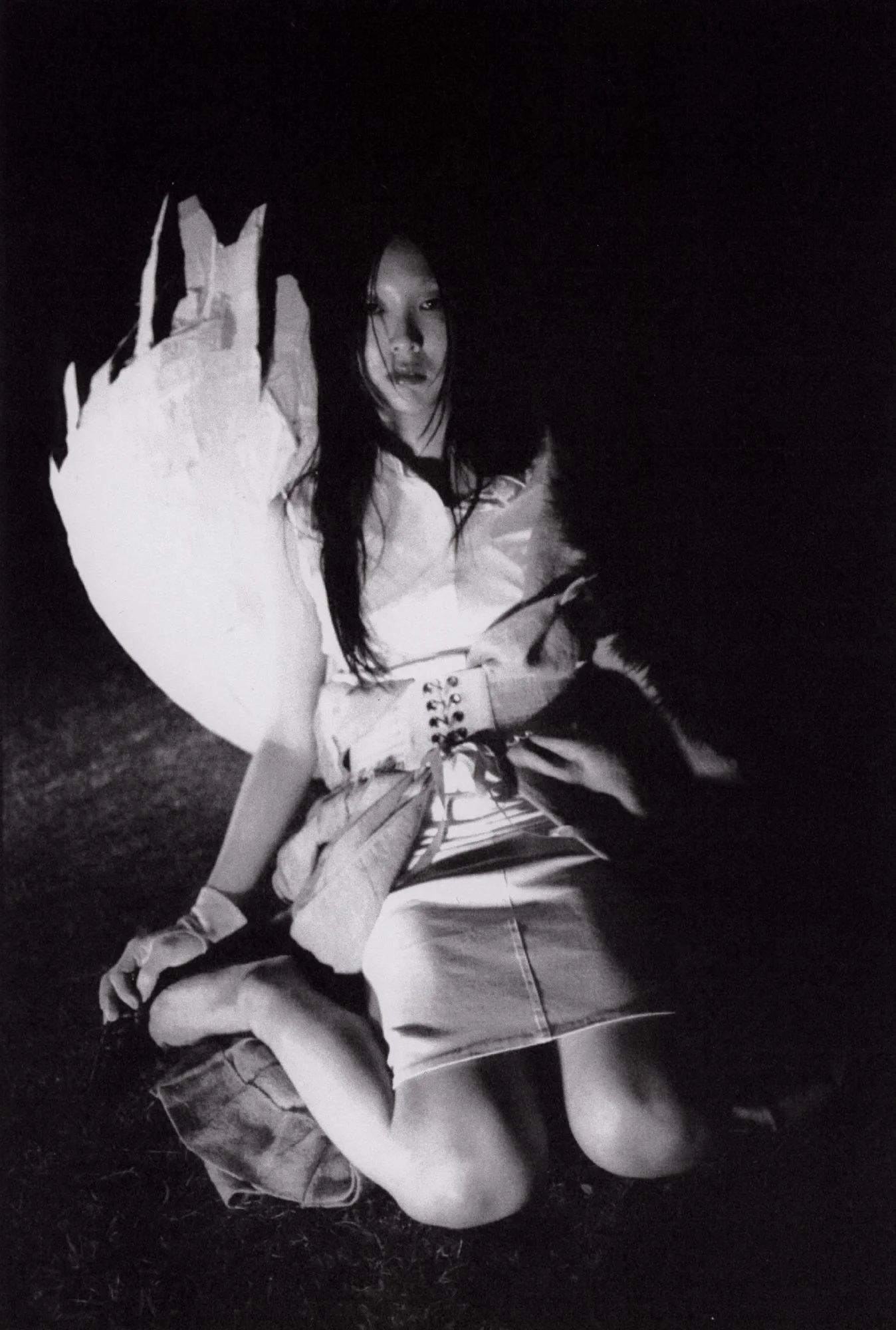
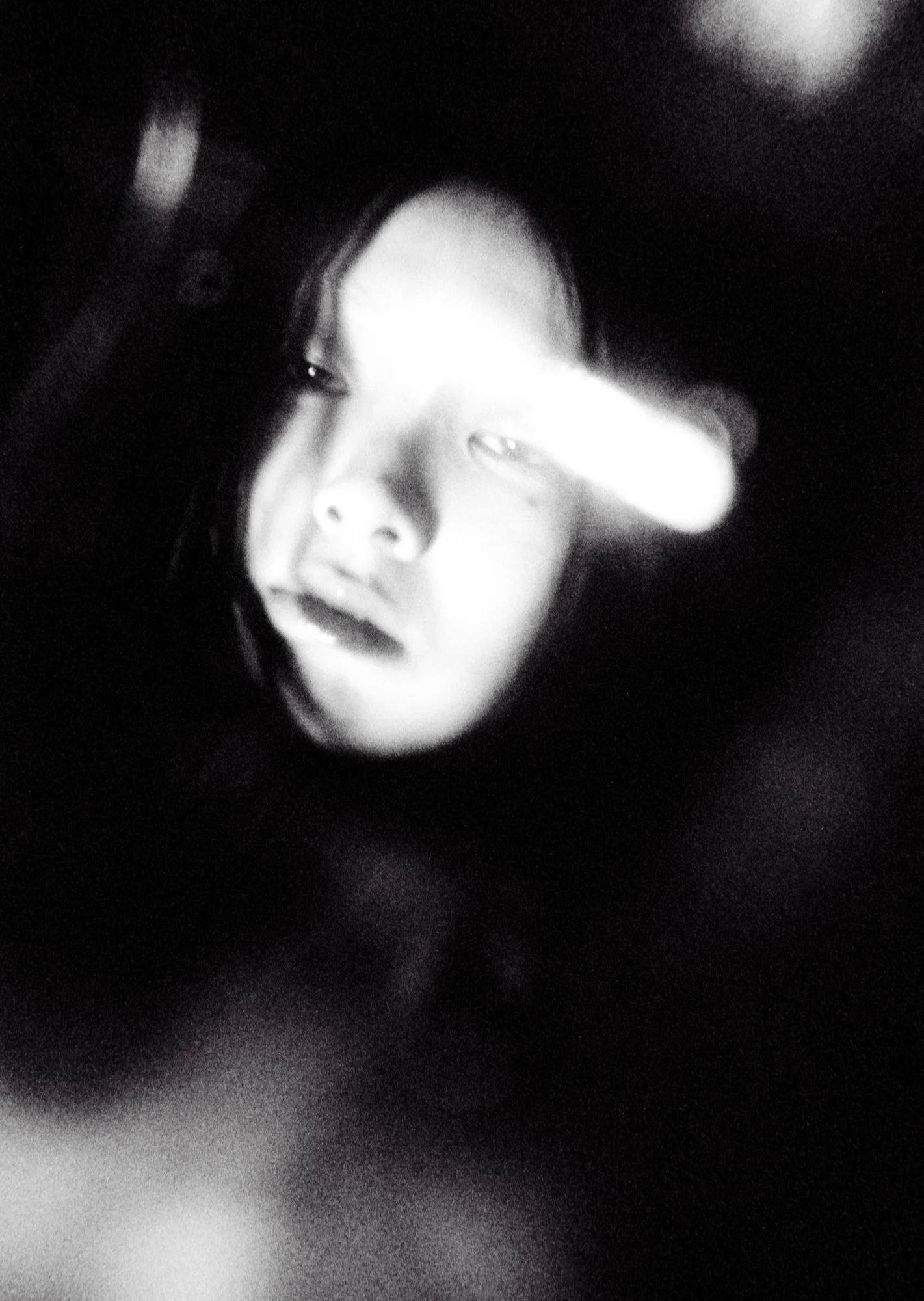
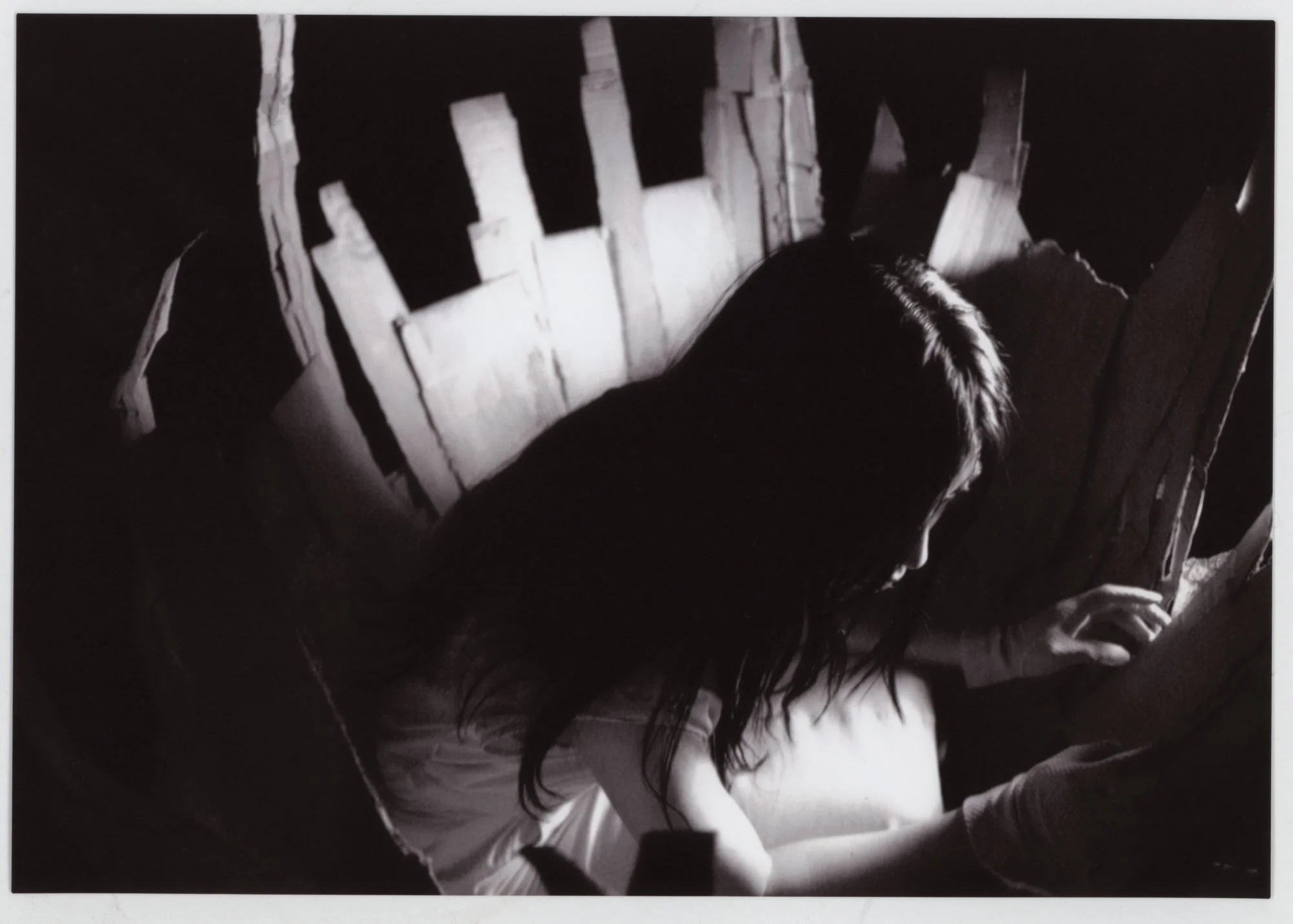
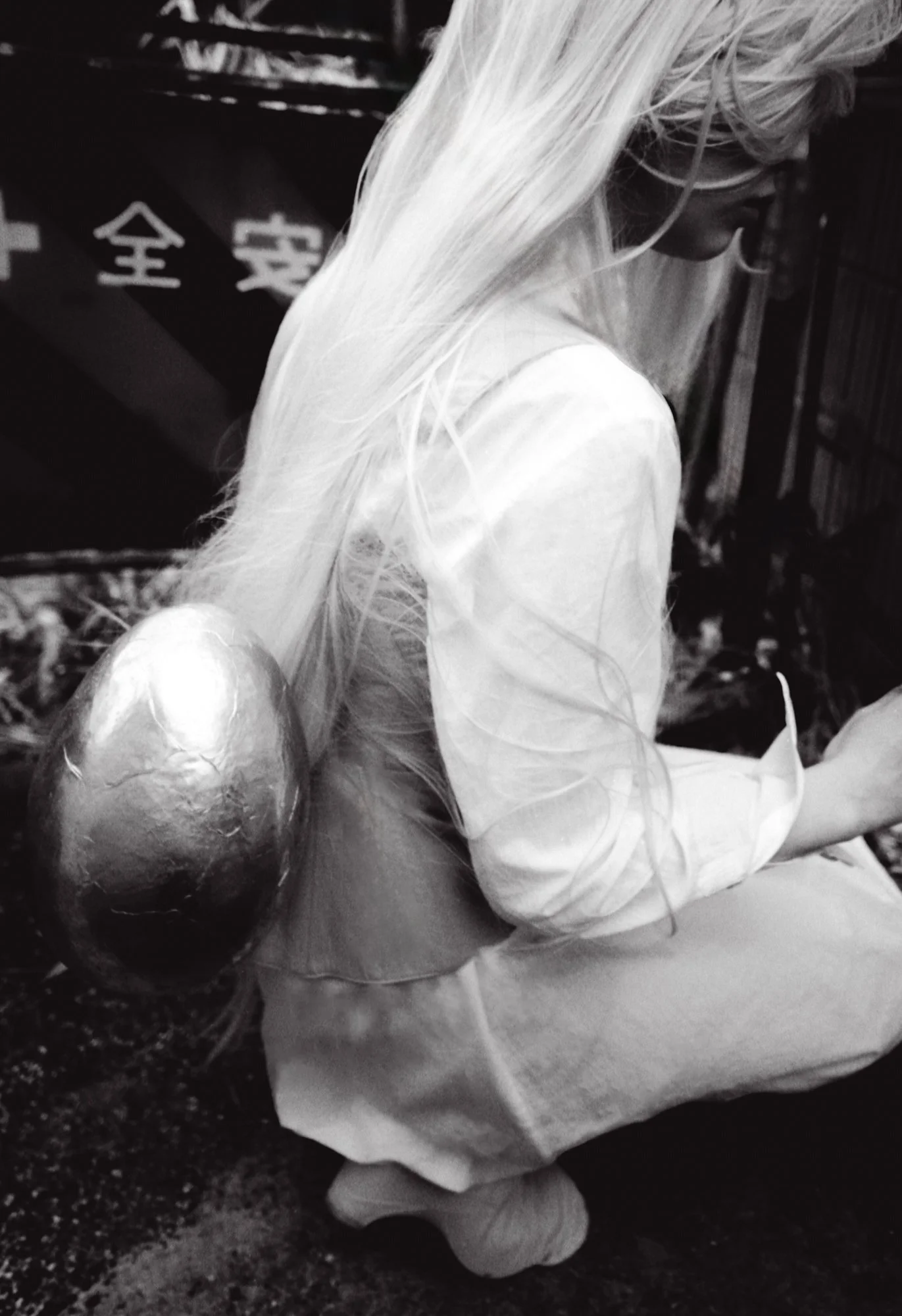
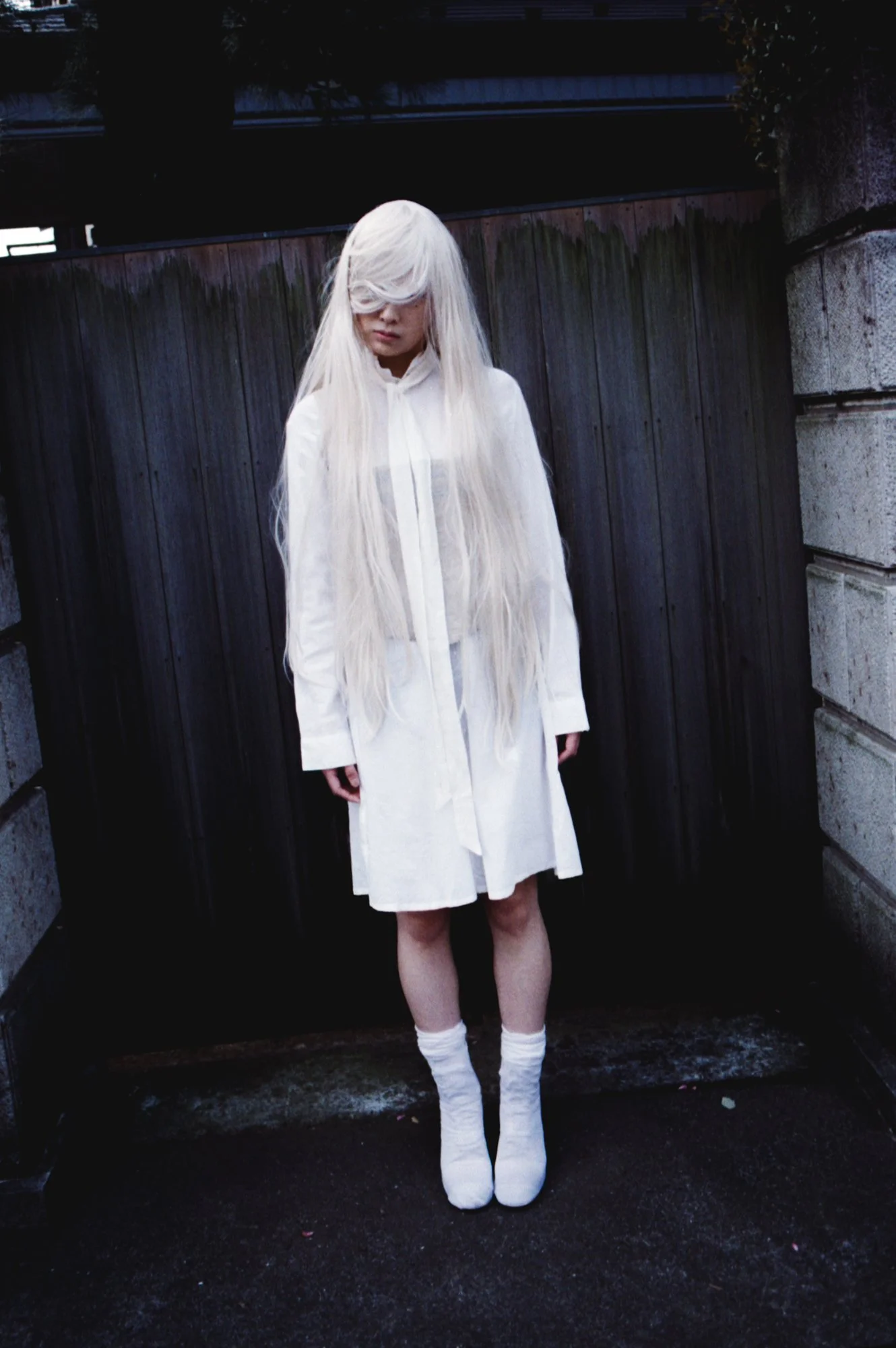
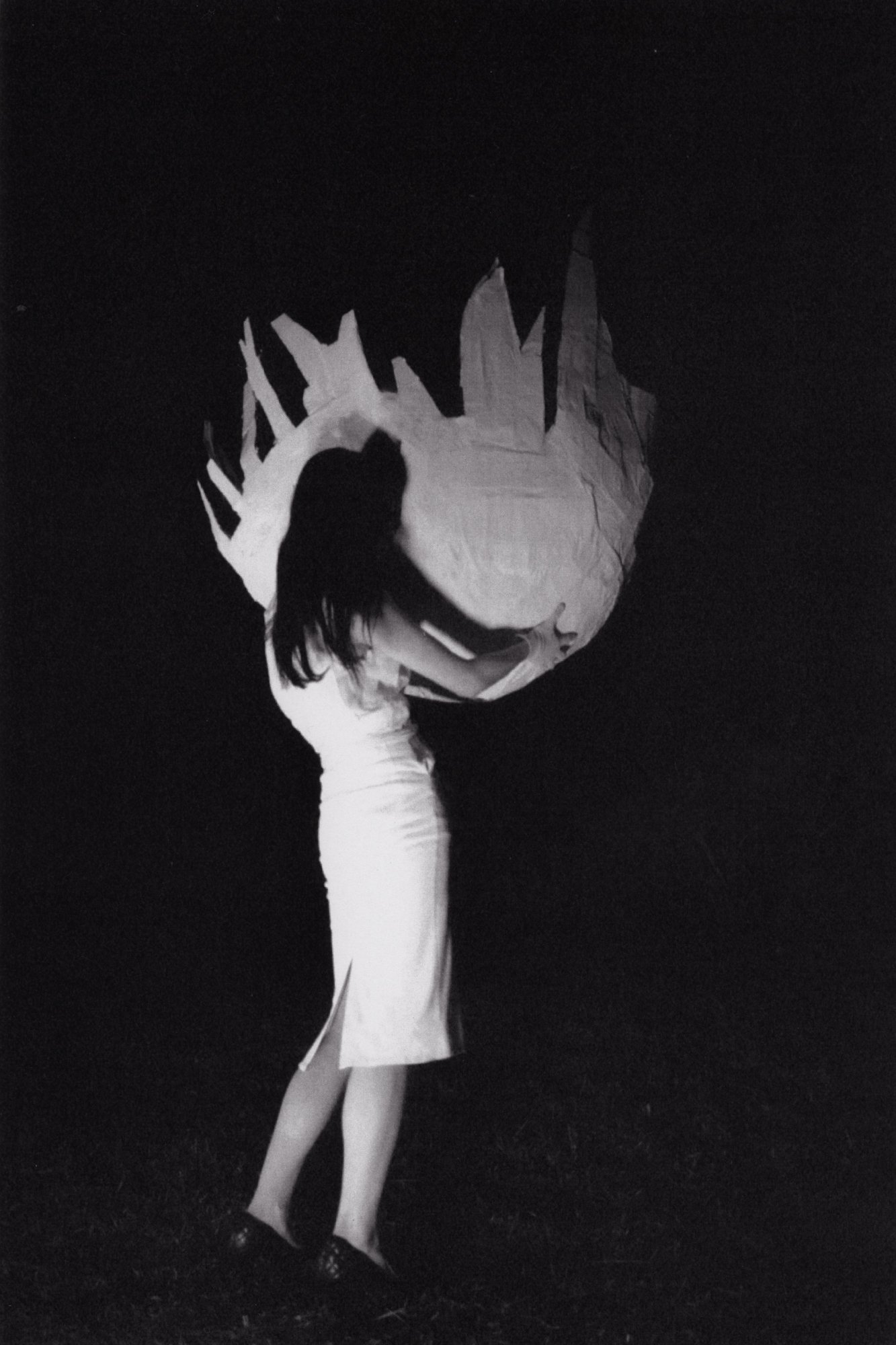
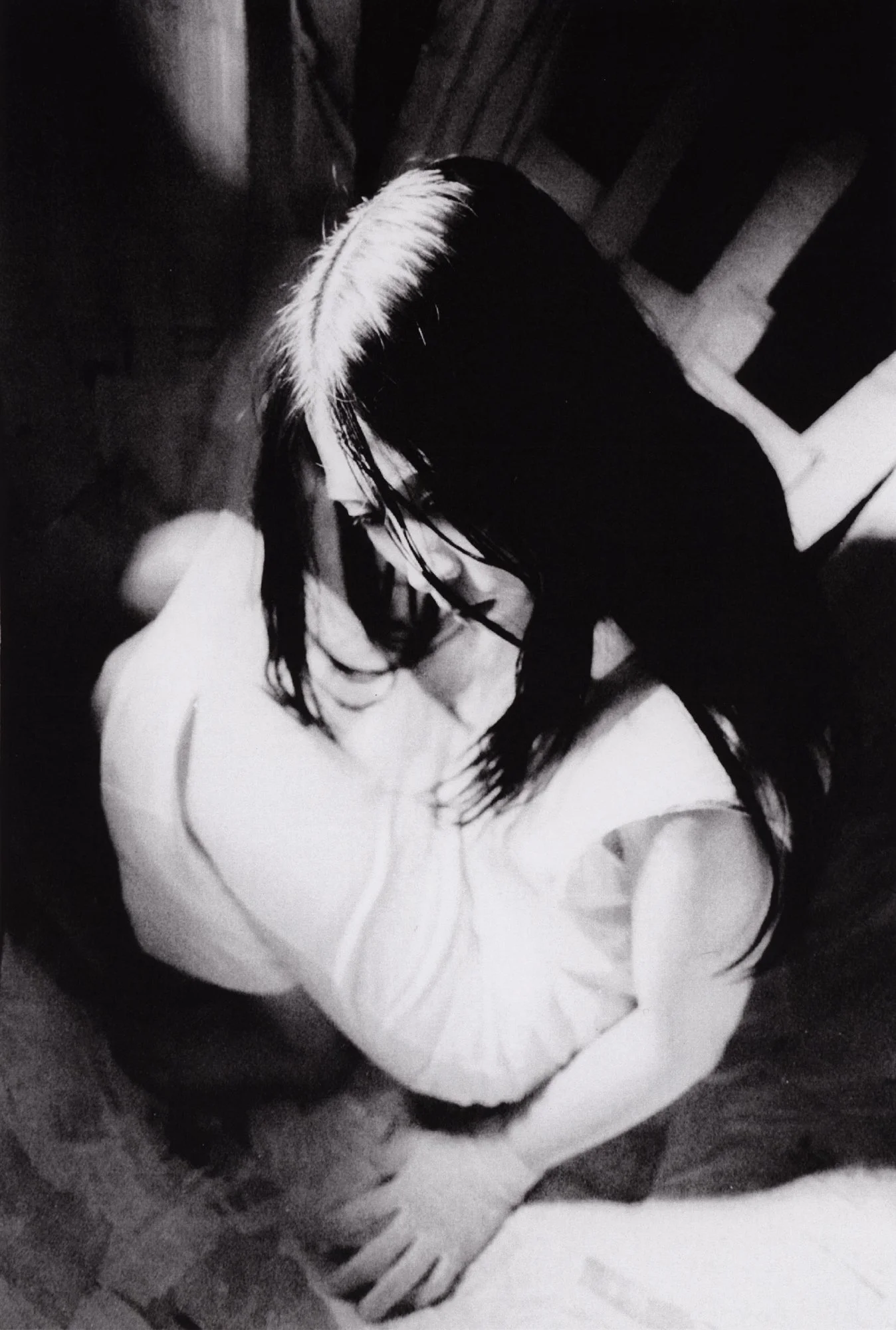
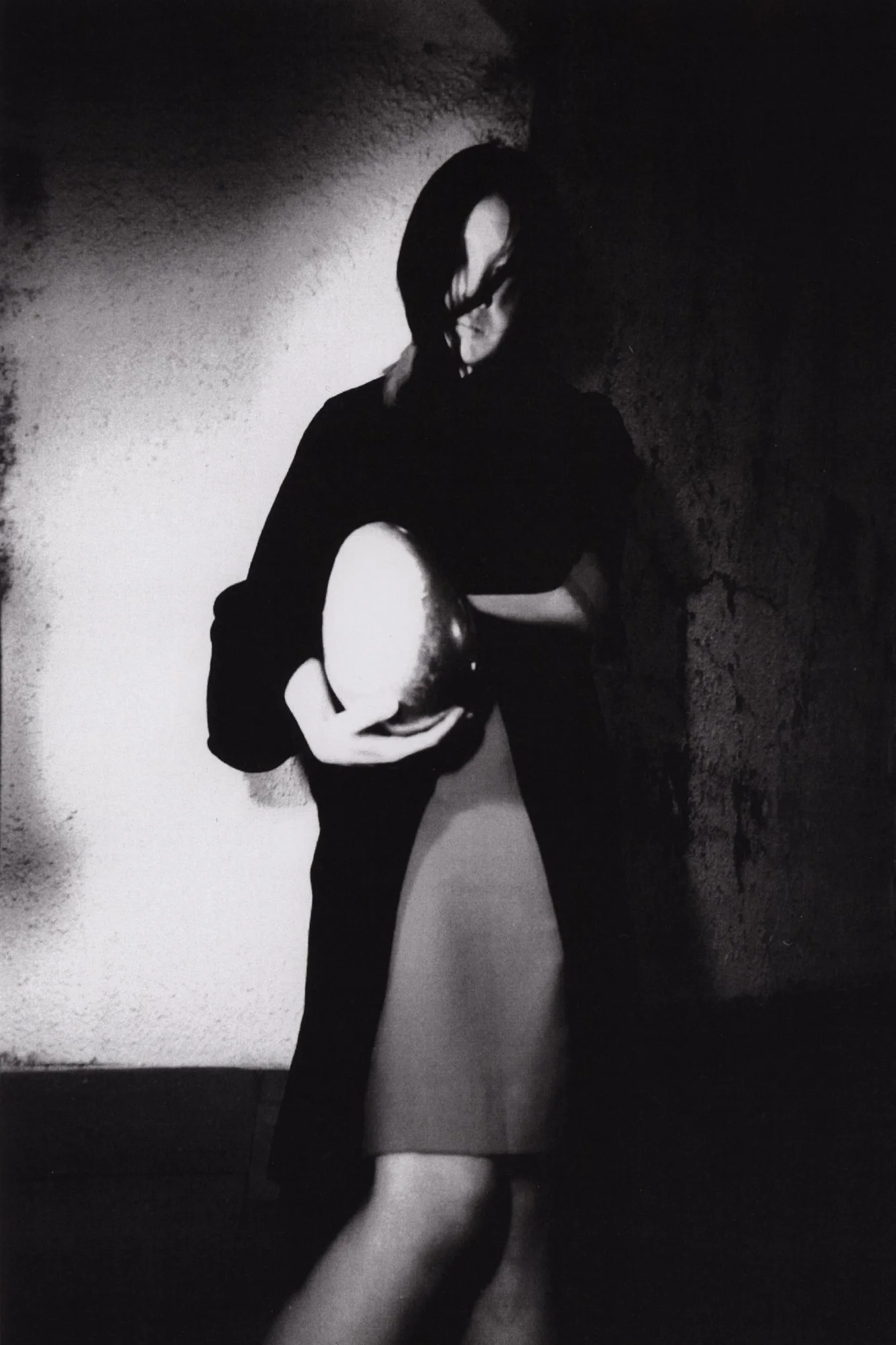
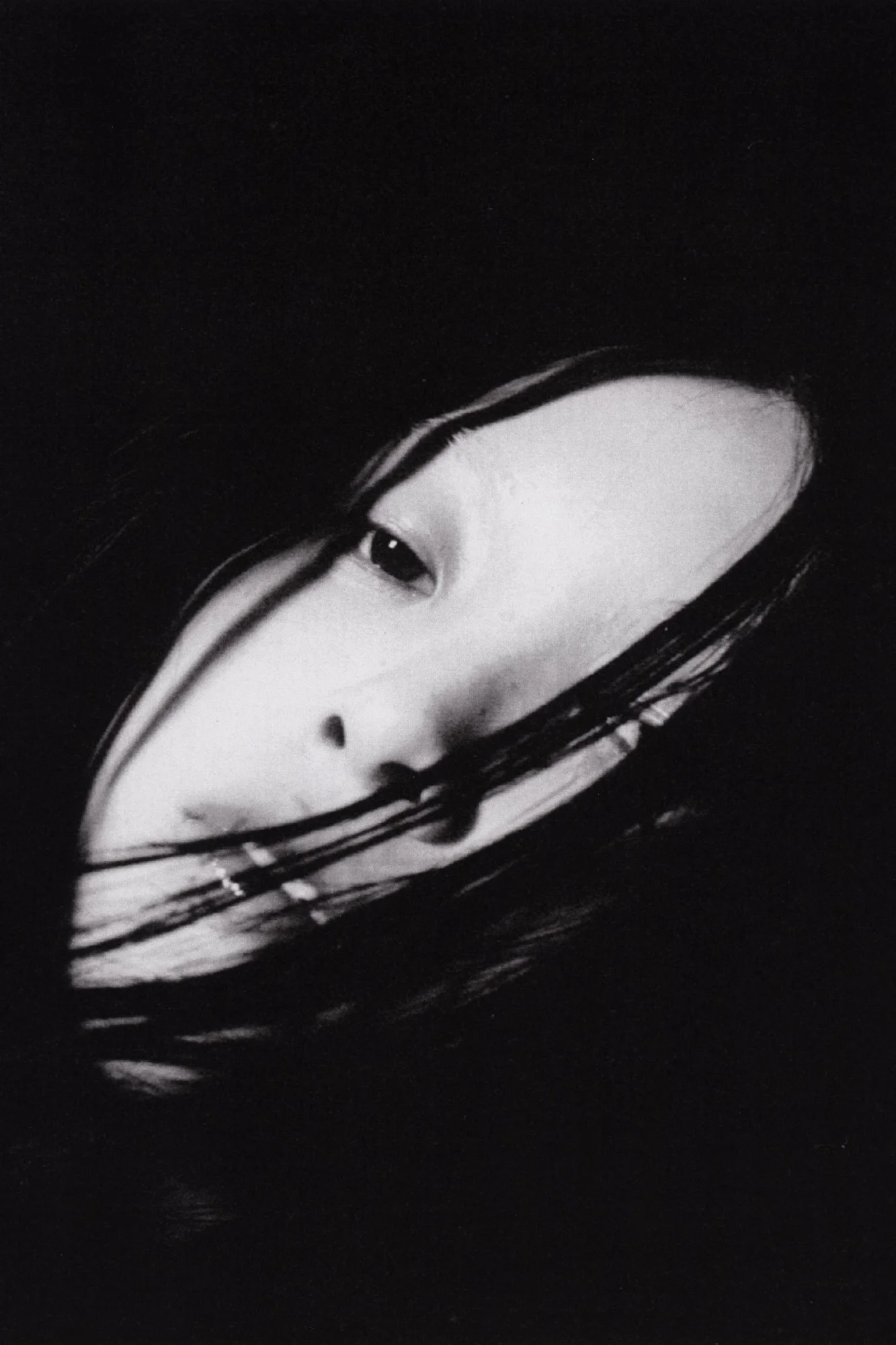
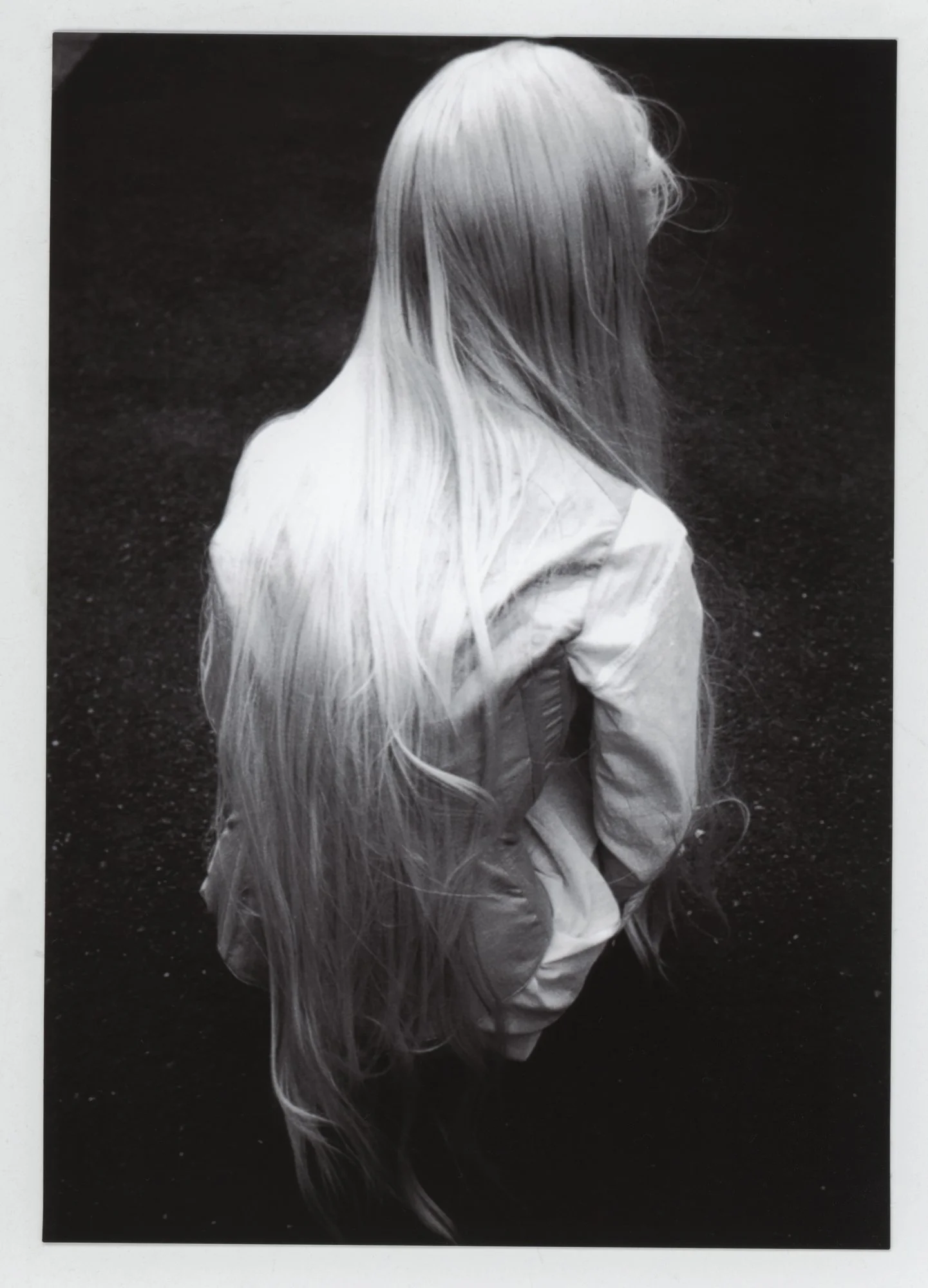
Phantasy recently collaborated with the store to create an exclusive photo series as well as meeting with KAKKO’s director eve lantana and creative director Koki to discuss the underlying concept of the brand, their opposition to fixed narratives, and the necessity of grasping the “thread of chaos” built into our information society.
Phantasy: Could you please introduce yourself?
eve: I’m eve lantana, the director of KAKKO and a freelance stylist. I studied architecture at university, where I was exposed to anti-architectural philosophies and design processes, which I now reference in the way I structure and develop KAKKO.
Phantasy: When did your interest in fashion begin?
eve: While studying at university, I developed a deeper understanding of history and classical frameworks. Simultaneously, while maintaining respect for them, I became drawn to methodologies that deconstruct existing structures. Rather than confining this to theory, I became interested in fashion as a field where these ideas could be engaged at a more physical scale through sensibility and bodily experience.
Phantasy: So after studying how did you move towards applying these lessons and concepts to styling?
eve: Although architecture and fashion differ in scale, I see them as continuous in that they both deal with structure and relationships. In architecture, one designs relationships between space and elements. Similarly, styling involves constructing relationships between clothing, the body, and the contexts in which a person is situated.
Rather than converging toward a fixed style or image, I approach styling as something that emerges through physical engagement and movement. In that sense, I consider styling, like design and architecture, as a medium for proposing composition.
Phantasy: Could you tell us a little about the history of KAKKO?
eve: The first KAKKO store was opened in January 2021 by its owner, Toui. At the time, it operated as a vintage store run by students, for students. As the store gradually developed its own style, I also became involved in direction.
In August 2024, we opened a second location, and since then we have approached visuals and composition more consciously, while continuing to organise short term pop ups with a diverse range of brands, communities, and artists.
“KAKKO itself is not limited to a fixed category such as a vintage store, but is understood as something that emerges within different contexts and interpretations.”
Phantasy: What does “KAKKO” mean?
eve: The brackets used in our logo function as a space into which interpretation can be inserted. At the same time, by suggesting a form that is not fully closed and that contains a certain gap, they express an intention not to confine things within a single definition or framework.
In that sense, the word KAKKO itself is not limited to a fixed category such as a vintage store, but is understood as something that emerges within different contexts and interpretations.
Phantasy: How does KAKKO differ from other clothing stores in Tokyo?
eve: While our work exists within the framework of retail, we do not converge solely toward the act of selling. Influenced by deconstructive thinking, anti-architectural approaches, and radical methodologies, we approach space and styling as a processes of continuously questioning whether existing forms and roles should be dismantled.
At the same time, we do not explicitly position what we do as art, research, or philosophy, but rather see ourselves as working within the schema that exists between them.
Phantasy: You also designed the interior of the shop. What was the philosophy underpinning this spatial design?
eve: Rather than presenting space as something complete, I approach it as a provisional composition. This is reflected in decisions such as loosely separating the back area and the floor with fabric instead of walls, or abstracting fixtures to blur their function.
Since we deal with vintage garments, they inevitably carry past contexts and memories. However, rather than collapsing them into a single timeline, I aim to create conditions in which they can emerge within shifting relationships, while maintaining respect for their histories and the intentions of their designers.
By arranging all items in a flat and parallel manner and leaving space between them, I seek to create an environment in which individual interpretations can arise.
Phantasy: One of my favourite things about the store is how you arrange the items by colour and tones. It scratches the OCD part of my brain in such a satisfying way. Is this an antithesis to the information overload society we live in? A way of bringing order to chaos?
eve & koki: I feel that the chaos of contemporary society has already exceeded the limits of what we can perceive. By organising what is immediately in front of us, we can begin to grasp a thread of that chaos, and from there retrieve elements to bring back into expression. In that sense, it is less about imposing order and more about finding a way to come into direct contact with chaos itself.
Phantasy: I noticed a copy of Dune on your shelf. How important is world building within your practice?
eve: While I am drawn to works like Dune that possess a strong and cohesive world, we also keep a wide range of references across different media in the back space. However, the idea of world building is not something we emphasise strongly.
Rather than converging toward a fixed narrative or image, we value states that emerge through the layering of different elements and contexts. For that reason, instead of presenting a predefined world, we consider it more important to leave space for interpretations to take shape differently through relationships between space, objects, and context.
Phantasy: I personally discovered KAKKO through your collaborations with creatives in Tokyo, such as Madeleine Ray and M I Q. How important are these editorial projects and the creative community surrounding the store?
eve: Editorial projects and collaborations are important elements of our creative expression. We view the surrounding community not as something fixed, but as something that continuously shifts through changing relationships.
Within those dynamics, we value the emergence of unexpected connections and new ways of seeing. Moving forward, we hope to continue developing our work while engaging with a range of creatives, grounded in mutual respect.
“Forms of abstraction and radicality that do not depend on a specific medium or individual tend to have a wider range of effect and are less easily absorbed into a singular interpretation. ”
Phantasy: What kinds of brands does KAKKO stock, and why those in particular?
eve: We do not limit ourselves to specific genres, countries, or periods, and instead carry a wide range of items from designer pieces to vintage and antiques. Rather than selecting based on appearance or trends alone, we prioritize how each item’s background, structure, and the intentions of its designer can generate new relationships in the present.
Phantasy: And the customers?
eve & koki: We receive a wide range of visitors from both Japan and abroad, particularly younger generations. Many of them are not simply following existing trends, but are attempting to approach fashion through their own interpretations.
Rather than seeking a predefined style, we hope they engage with fashion in their own way through their relationship with the space and the items.
Phantasy: As technology continues to flatten culture, and AI shapes us into increasingly similar forms, how does your work at KAKKO respond to this?
Koki: We see AI as a technology that will inevitably continue to permeate society. What matters is not whether to use it or reject it, but how we choose to relate to it.
Rather than presenting items as carrying fixed meanings, we offer them as spaces in which interpretation can occur. Even when encountering the same object, meaning shifts depending on how it is received and engaged with.
Instead of asserting originality in opposition to homogenisation, we work from within that condition, creating environments in which individual interpretations can emerge naturally and give rise to forms of individuality and criticality.
Phantasy: If you had to describe the philosophy of KAKKO in three ideas, what would they be?
eve & Koki: Development of Parole. Architecture of Margin. Image and Reality.
Phantasy: What does the future hold for KAKKO?
eve: Rather than moving toward a fixed direction, we hope to continue engaging with what emerges through changing relationships. Through that process, we also value the possibility that new developments may arise through working with a diverse range of people.
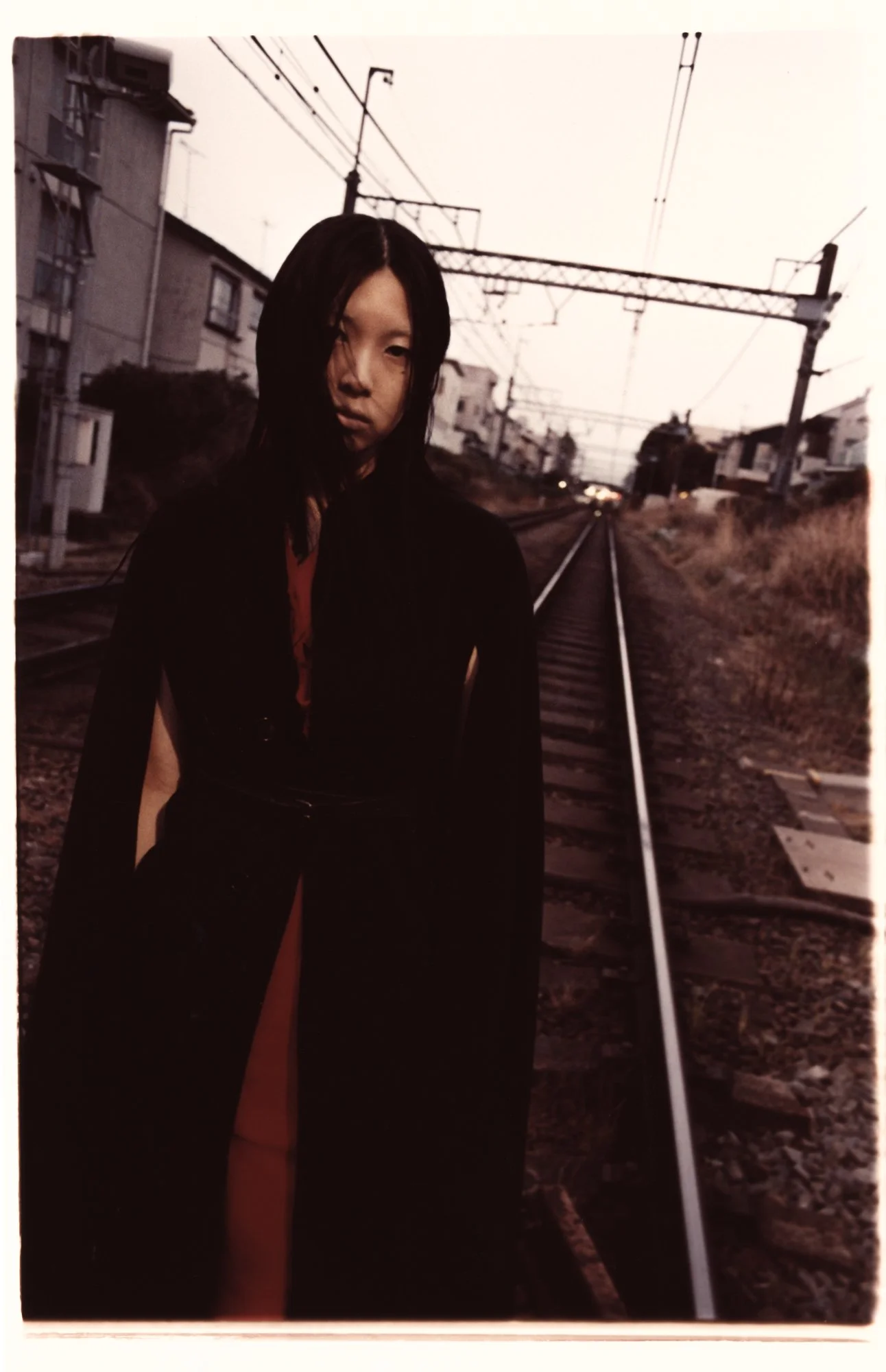
CREATIVE DIRECTOR: JAMES ELLIOTT
PHOTOGRAPHER: MIA SATO O’NEAL
STYLIST: EVE LANTANA
HAIR STYLIST: HARUTO
MAKEUP ARTIST: MIYABI
PROP ARTIST: REIANN
MODEL: SAKURAKO HANAMI


