Ayaka Endo
Interview by Liv Franks
Phantasy: How do you feel your work has evolved from your 2021 Kamuy Mosir (Land of the Gods) work to this latest exhibition?
Endo: I first presented Kamuy Mosir in 2021 as my graduate project for my master’s degree, and I continued working on it until 2023. When I began photographing and developing Kamuy Mosir, we were right in the middle of the COVID-19 pandemic. At that time, I felt as though I was in darkness, and I think I was strongly seeking some kind of salvation in nature. I was thinking about the relationship between humans and nature as something that already existed outside of myself.
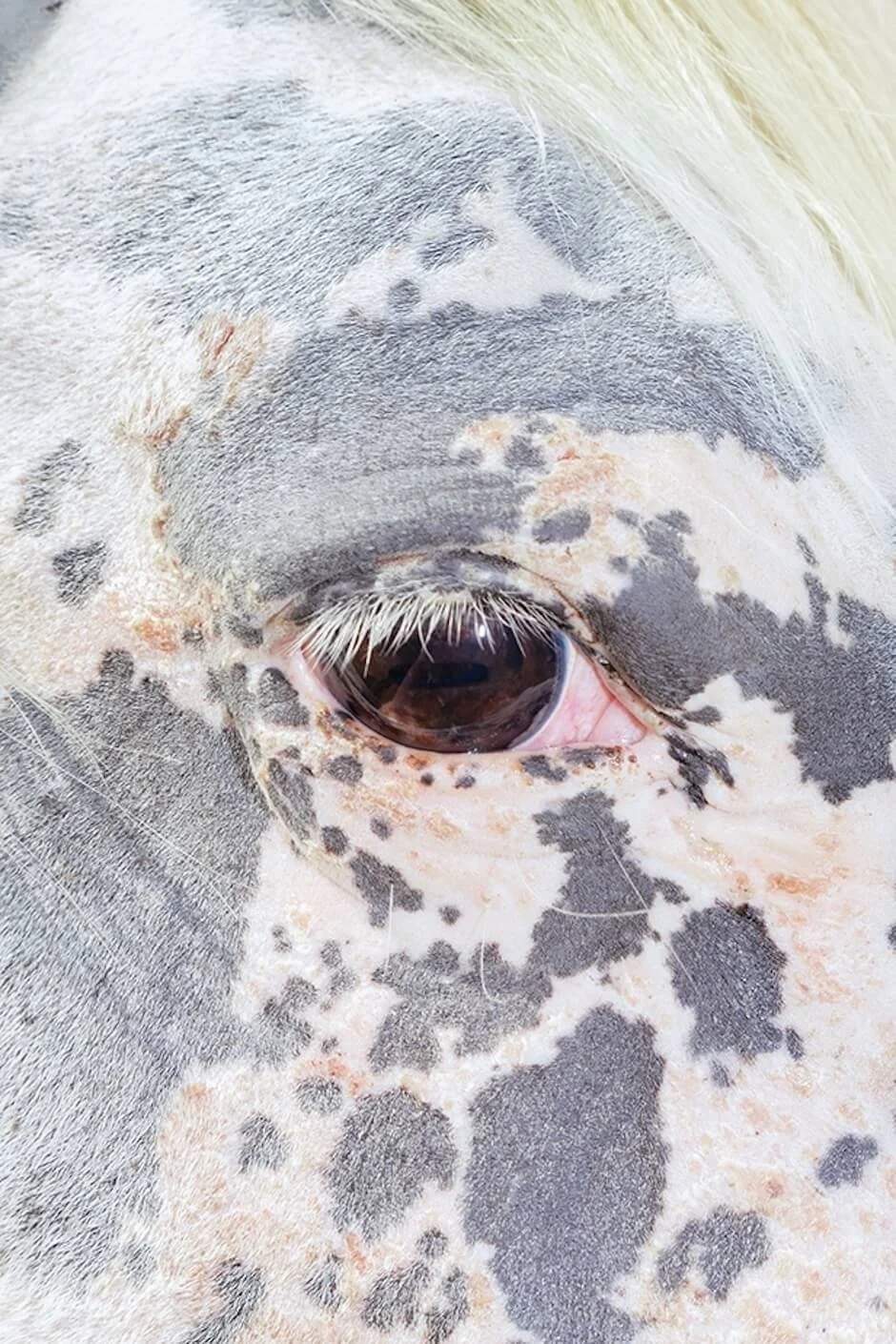
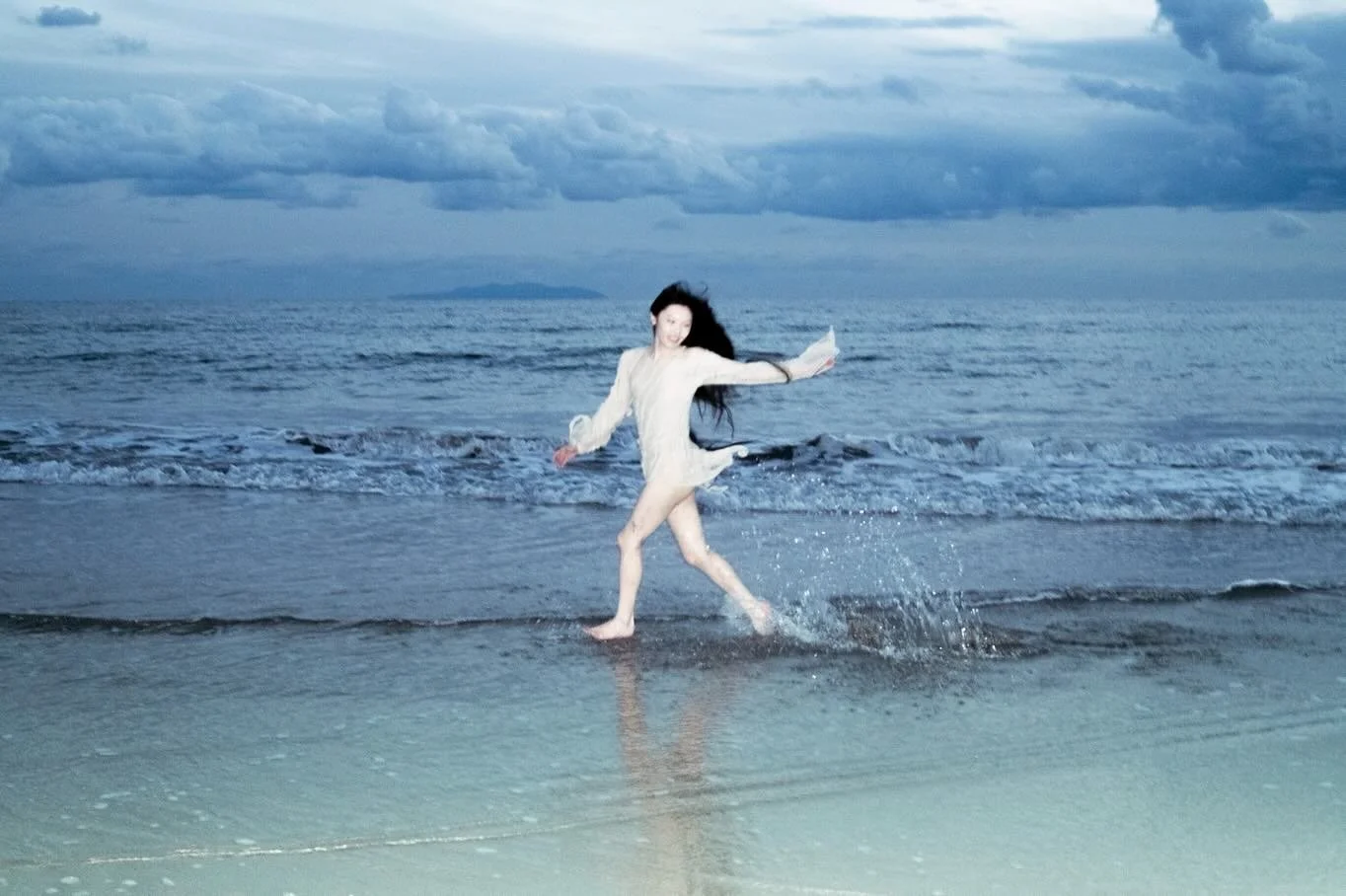
Pneuma was photographed when I visited Tono in 2024, and I think I was interested in something more fundamental and bodily: what I myself feel when I am in nature, and how the body perceives its surrounding environment. The actual shooting time was also very short, around an hour, and I photographed with a lightness that felt almost like a passing gust of wind.
Phantasy: Which themes do you continue to work with? For instance, the central themes of animism and pneuma share the belief that everything is bound together by the same cosmic breath.
Endo: Kamuy Mosir and Pneuma share a way of seeing nature and humans not as separate, independent entities, but as things that exist while continually affecting one another. In Kamuy Mosir, using the animistic worldview of the Ainu as a point of reference, I was looking at a world in which non-human beings such as animals, plants, land and natural phenomena each possess their own spirit or presence.
In Pneuma, on the other hand, I begin with the ancient Greek word meaning “breath,” “wind” and “spirit,” and turn my attention toward things such as breathing, wind, light and atmosphere, things that cannot be seen, but that are constantly moving between the body and the world.
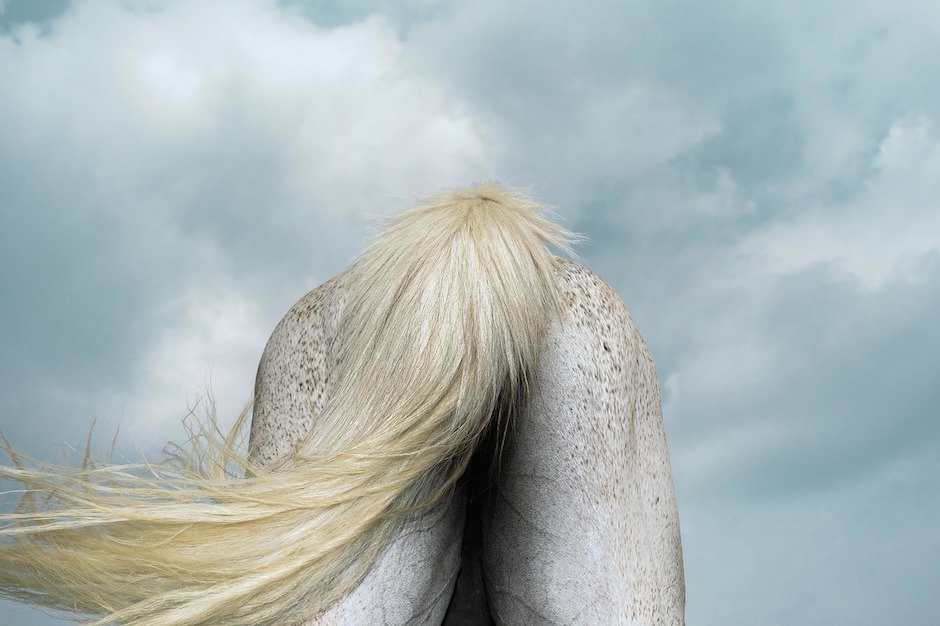
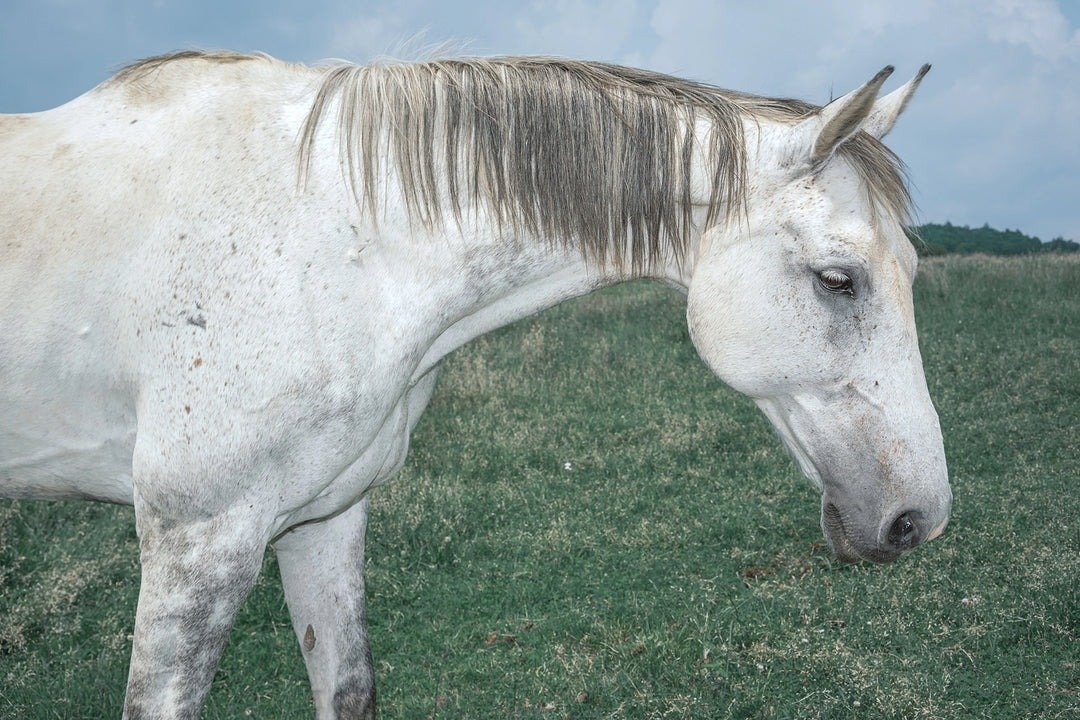
I felt that this word expressed what I experienced while photographing the horses. The act of photographing them was as fleeting as the wind, and the horses, delicate yet wild at the same time, made me strongly aware of something like the invisible air between myself and the world, or the rhythm of breathing.
Phantasy: Where did this interest in spirituality come from?
Endo: I think I have always been drawn to the feeling I experience when I am in nature, as though I am being accepted exactly as I am, and to the sense of awe I feel toward things that are beyond human control. When I am in nature, I feel that I too exist as part of a much larger cycle and it was only in the face of nature’s overwhelming force that I was able to forget myself and become completely immersed. For me, having gone through a difficult childhood and adolescence, that was also a great source of salvation. Japan experiences many natural disasters, so perhaps this sense of awe toward nature has been ingrained in me.
Before I started taking photographs, I assumed that everyone saw the world in the same way I did. But through taking photographs and presenting them as artworks, I gradually realised that even when people are looking at the same thing, the world they see can be different. At the same time, I also realised that although photography depicts things that exist in reality, it never simply reproduces reality as it is. I think this led me to become more conscious of the relationship between what is visible and what we sense behind it.
I am not religious, but I attended Catholic schools for many years from a young age. Being in an environment where we prayed regularly and thought about the existence of an invisible God may have gradually ingrained in me a sensitivity towards invisible presences.
For me, my interest in spirituality comes less from any particular faith than from the fact that humans have long sensed something beyond themselves in nature, and from my own experiences of having felt something similar within nature.
Phantasy: Why was it important for Pneuma to exist as a book rather than only as digital images?
Endo: I think of a book as a device through which a sequence of images can be experienced through time and through the body. The binding, the texture and feel of the paper, the physical act of turning the pages, and the pauses that emerge between one photograph and another all create an overwhelming amount of information that can be physically felt once the images are placed on paper.
The moment I experienced in that place was deeply physical, so I felt that a photobook could convey what I felt at the time more effectively than digital images could.
“The act of photographing them was as fleeting as the wind, and the horses, delicate yet wild at the same time, made me strongly aware of something like the invisible air between myself and the world, or the rhythm of breathing.”
Phantasy: Tono is known for being a living repository of myth and folklore, what about that drew you towards the town as a location for your photography?
Endo: I actually didn’t know that place existed in Tono. It began with a friend of mine who had visited Tono many times while studying folklore at university. She had previously visited a facility with horses called Queen’s Meadow, and she wanted to take me there.
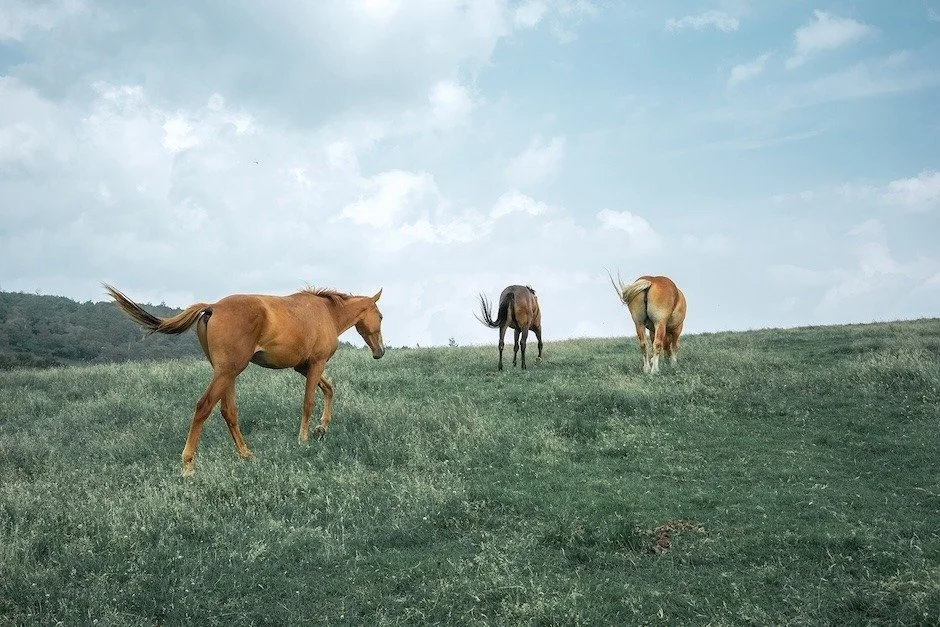
During the summer, however, the horses were not kept at the facility. Horses from various places were released onto that highland pasture without bridles or horseshoes.
Tono is surrounded by a strange atmosphere that feels as though time has stopped, something you could never really understand without visiting it yourself. It is also a place where many stories remain about the boundary between the dead, other worlds, and the world of the living.
In Japanese folklore, the relationship between humans and horses is very deep, and horses are also sometimes described as beings that carry ancestors during Obon (a Japanese event rooted in Buddhism where the spirits of ones ancestors are said to return to the realm of the living). Because of this, while photographing the horses in Tono, I began to feel that they were more than simply animals. They seemed like beings moving back and forth across the boundaries between humans and nature, and between the living and the dead.
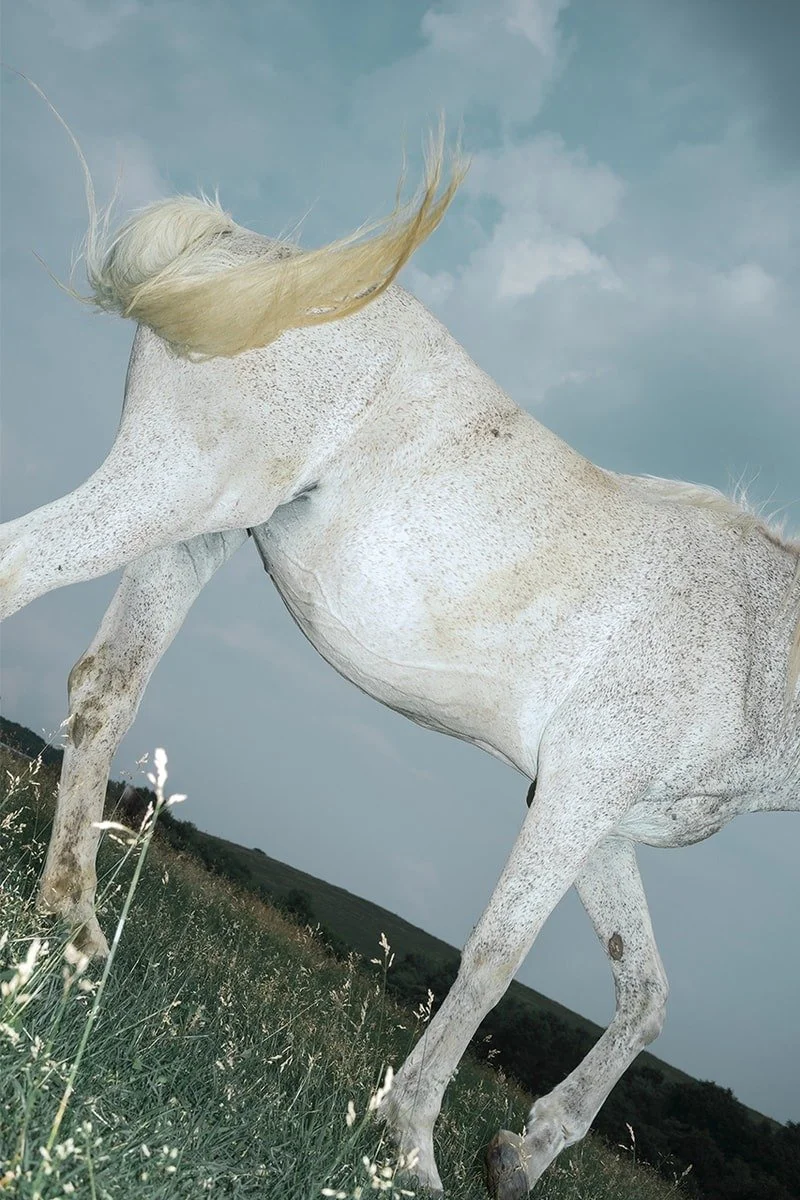
Phantasy: Why did you use horses as a subject?
Endo: Horses have been very special animals to me ever since I started taking photographs. I feel that they have a gentleness and sensitivity that I don’t experience in the same way with any other animal.
A few years ago, when I encountered some horses in Hokkaido, there was one horse that kept following me the entire time. Even though we couldn’t communicate through words, for some reason I felt as though we understood each other. I experienced something that I had never been able to find through communication with other humans, and I was so moved that I unexpectedly started crying. Since then, I have loved horses.
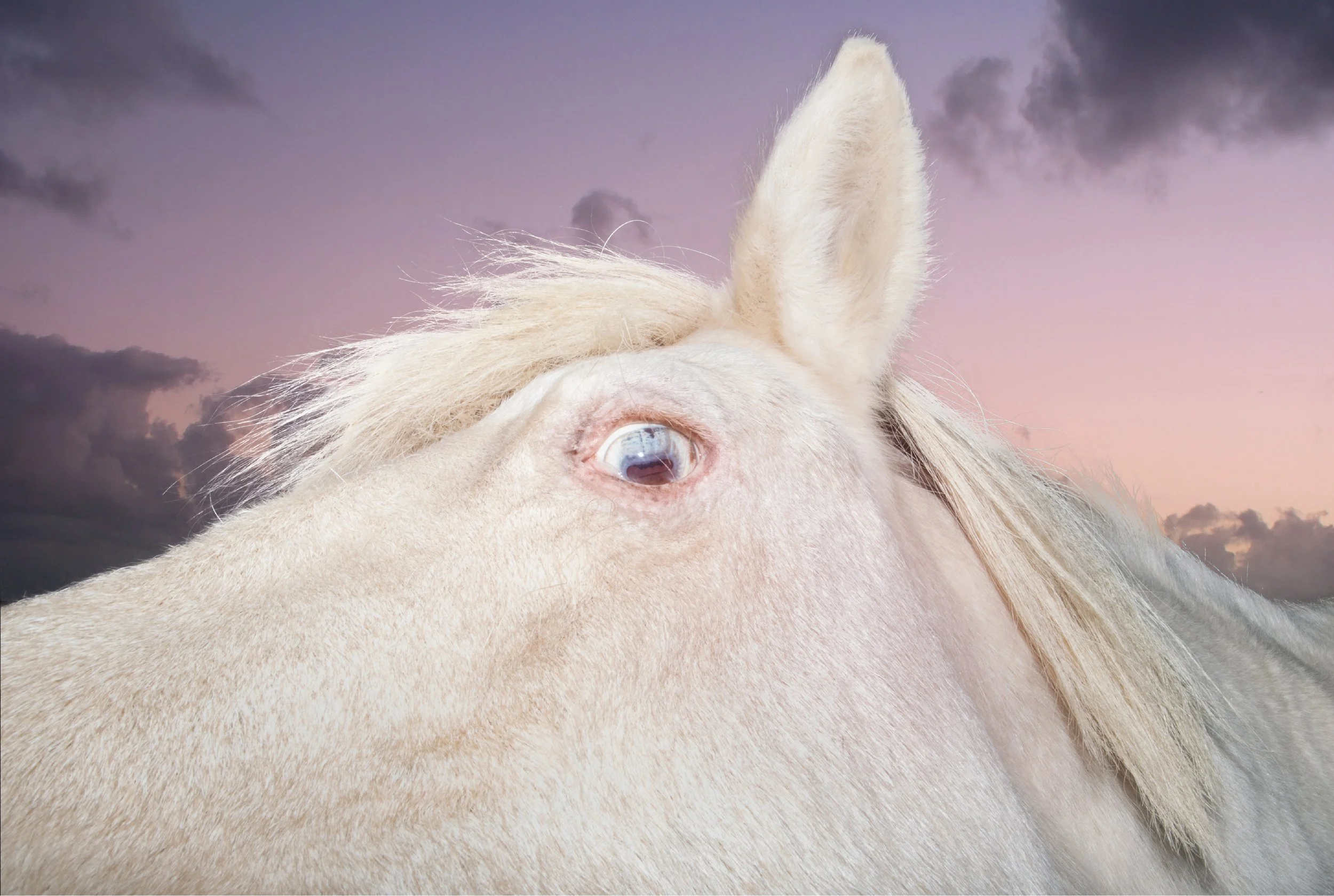
Phantasy: What role does the sky play in your photography?
Endo: I have loved looking at the sky for as long as I can remember. I still remember running home from school when I was in junior high school just so that I could see the sunset.
For me, the sky is one of the subjects through which I feel light most strongly. It has stretched above us since long before we were here, and yet it continues to change every day, every second. We can never see the same sky twice.
I think I photograph because I am drawn to the light and colour of each passing moment. At the same time, there is something about the sky that feels as though it could carry me somewhere far away. It spreads out directly in front of me, and yet I can never reach it. I feel a kind of longing in that distance and unattainability.
The sky itself also contains very little information that identifies a particular period or place. By making it ambiguous where and when a photograph was taken, the image can become detached from a specific place and time and take on a more universal and anonymous quality.
Within a photograph, the sky not only brings light but also gives the image a sense of scale and expansiveness. Even when I am photographing an everyday landscape, once the sky enters the frame, I feel that the small world in front of me becomes connected to something much more distant and much larger.
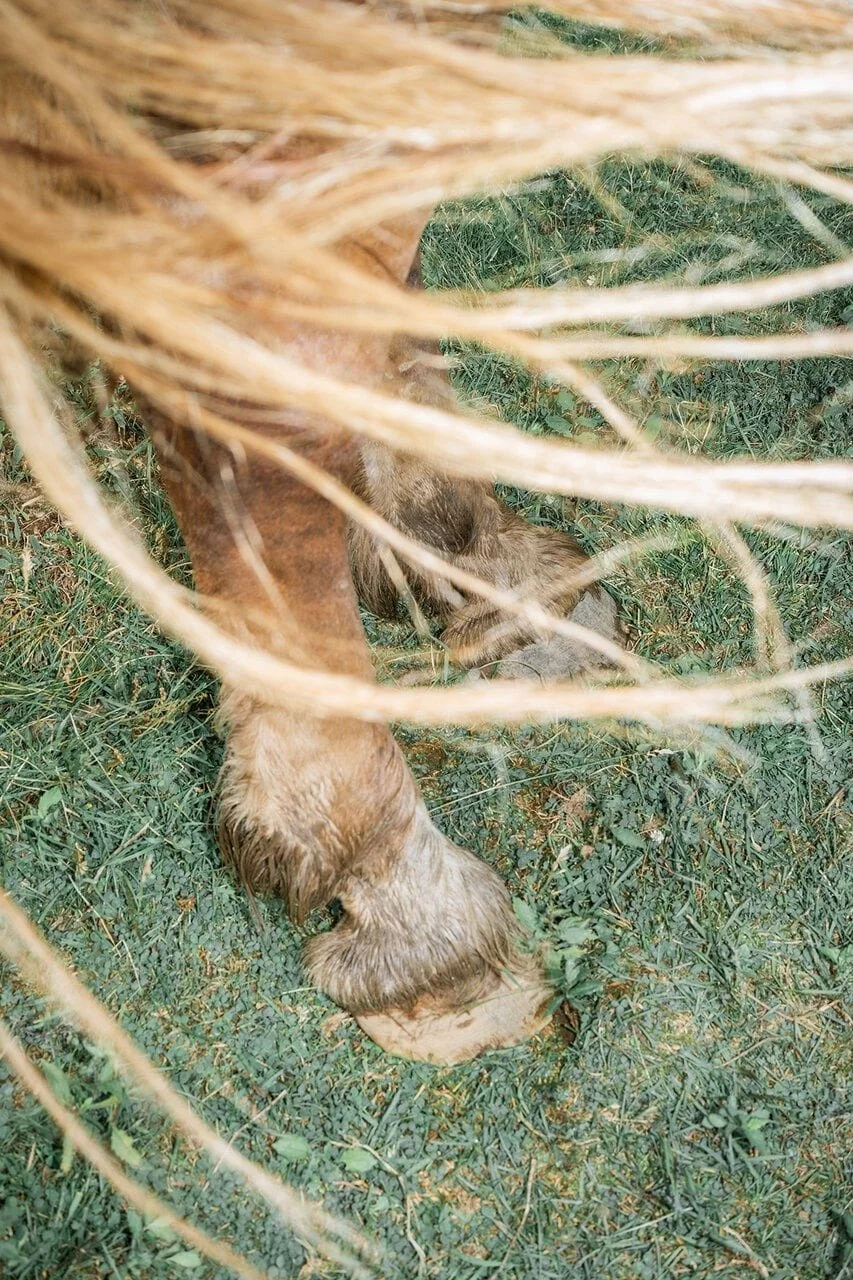
Phantasy: Further, how can photography be used to remove the boundary between the artificial and the organic?
Endo: To begin with, I think it is difficult to completely separate the artificial from the organic. Artificial objects are also made from materials that exist in the natural world, and humans, who make those objects, are themselves part of nature.
That said, I think I also tend to see the world through those classifications. But photography has the ability to temporarily make the boundary between them more ambiguous. Because I can extract the part of a landscape that I want to frame and represent different things on the same flat surface through the same gaze, photography may have the power to make that boundary less certain.
“I feel that trying to name and understand everything also contains a certain arrogance. And I think there is still a considerable distance between understanding something intellectually as knowledge and experiencing it through the body.”
Phantasy: Your work often leaves space for ambiguity rather than explanation. Do you feel like a sense of mystery and wonder has been lost in society today?
Endo: I feel that we live in a society where it has become difficult to leave something unknown simply as “unknown.” At the same time as we live in an incredibly convenient age, perhaps we have less time to look at something without understanding it, to imagine, or simply to feel it in our own way.
Sometimes I feel that trying to name and understand everything also contains a certain arrogance. And I think there is still a considerable distance between understanding something intellectually as knowledge and experiencing it through the body.
That is why I don’t want to explain everything in my photographs or limit them to a single meaning. I want to leave space for viewers to stop, and to bring their own memories and sensations into what they are seeing. Perhaps mystery is not simply about the existence of something supernatural. It may instead be a way of accepting that the world can never be completely understood, and of continuing to be surprised by it.
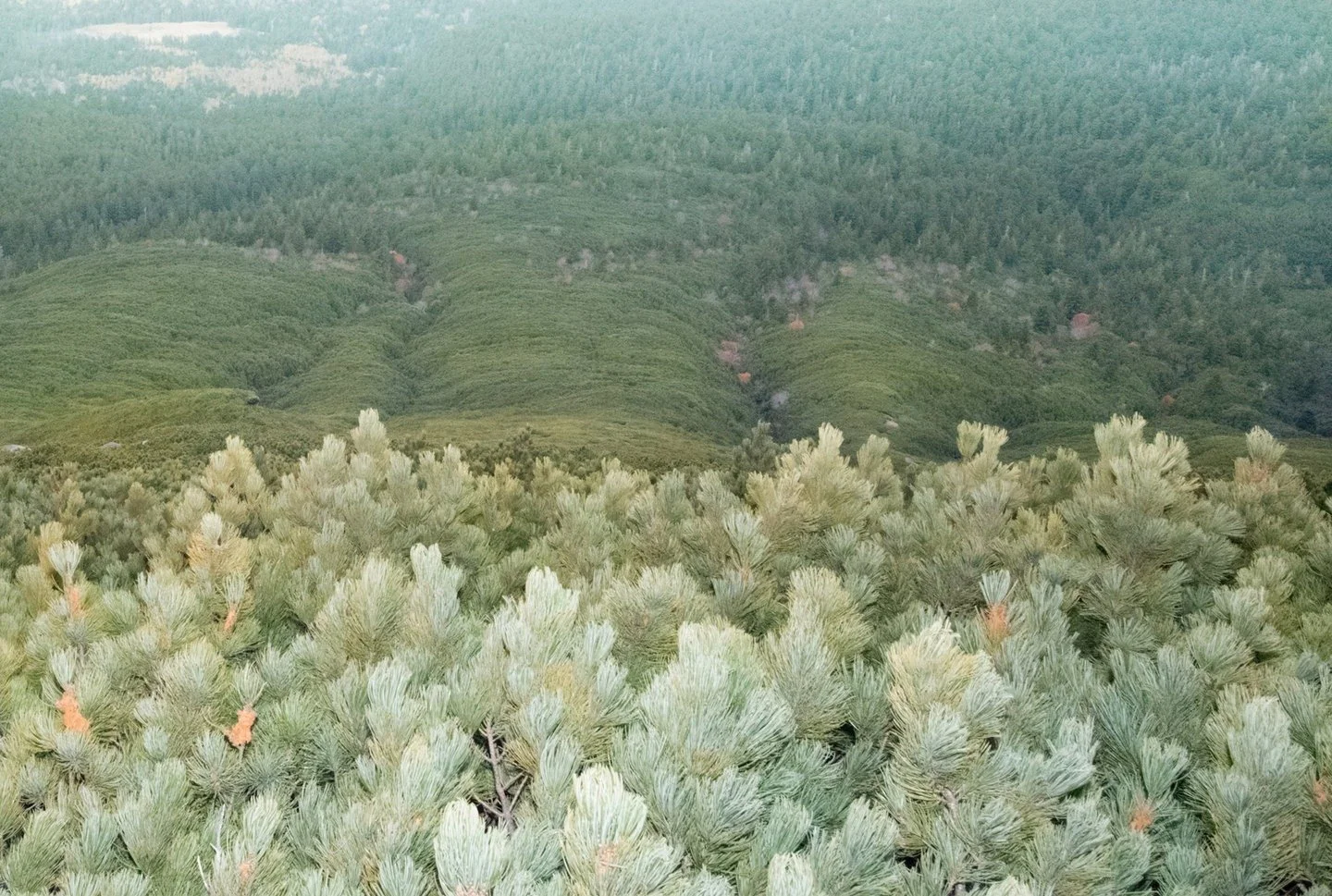
Phantasy: Your work suggests that humans are not separate from the natural world but part of it. Do you think contemporary society has forgotten that relationship?
Endo: I think that when I am surrounded only by cities made of concrete, it becomes difficult to feel that I am part of nature. Everything is immediately available and relatively easy to control, so it can create the illusion that we are somehow separate from the natural world.
But in reality, we cannot live without depending on nature for everything, water, food and air. When I go to the countryside, I sometimes even begin to feel as though I am being allowed to enter nature’s space. Through that physical experience, I can remember that we were part of nature from the beginning.
In Tokyo especially, I feel that there are far too few opportunities to come into direct contact with nature in everyday life. I think we need more time to physically experience changes in nature through things such as wind, light, soil, water and plants. By doing that, perhaps we can remember more clearly that nature is not something outside of us, but that we are always living within that relationship.
Phantasy: Much of contemporary visual culture encourages us to look quickly, consume and move on. Your photographs seem to ask for the opposite. Do you think photography still has the power to teach us how to look?
Endo: I hope that it does. Especially today, with the spread of the internet and social media, I feel that in most situations photography is accelerating the speed at which images are consumed. We have become able to take in an enormous number of images within a very short period of time.
As Susan Sontag suggests, photography has the power to transform our experience of the world into the acquisition of the world as images. But what is interesting is that the same medium can also resist that speed.
Just as I physically move through the world, stop walking, and photograph beings or moments that would normally be overlooked, I think photography can perhaps give viewers an opportunity to notice those things they might otherwise miss.
Phantasy: What do you think the future holds for you?
Endo: If I knew how things were going to develop, life would be much easier! I’m very curious about that myself. But I think my work will change along with the changes in myself. The things I am interested in, the way I see things, and my environment and experiences all shift little by little, so I think the work will naturally change with them.
I simply want to continue making work while remaining honest with myself at each stage of my life.